

When to Use Forced Hot Air vs. Forced Ambient Air for Industrial Drying
Not every drying application needs forced hot air. In fact, most industrial blow-off and drying jobs run perfectly well on a forced ambient air temperature rise of 30 to 50°F. The job is really just physics: displace the water mechanically with enough velocity and the water leaves with it. But there's a point where forced ambient air stops being enough, and pushing more velocity at the problem just wastes energy without the desired result. Knowing where that line sits, before you spec equipment, saves both budget and downtime.
What Forced Ambient Air Knives Already Handle
.JPG)
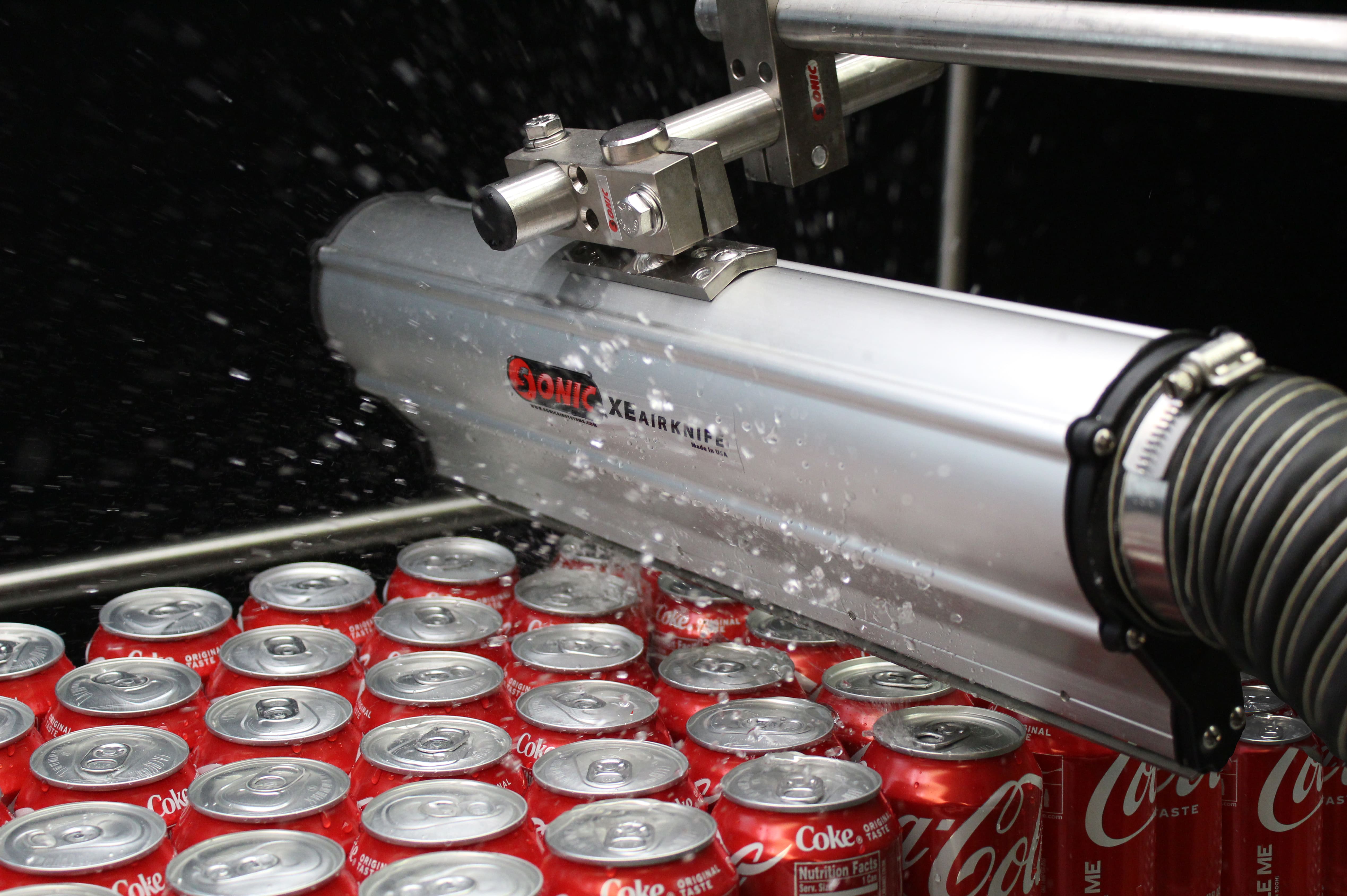
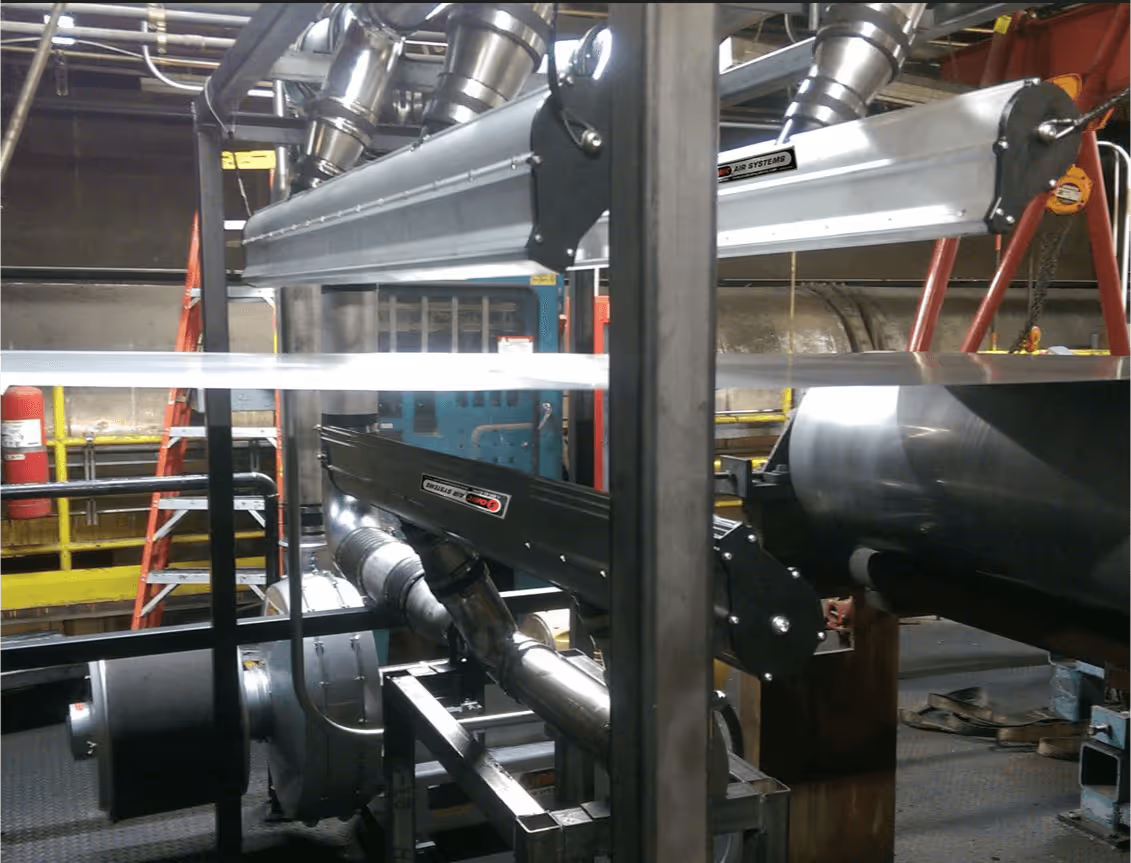
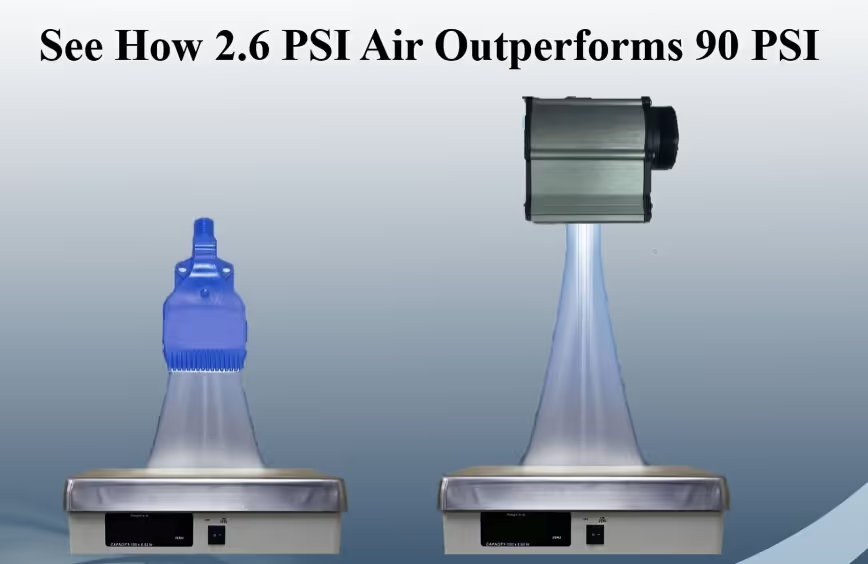
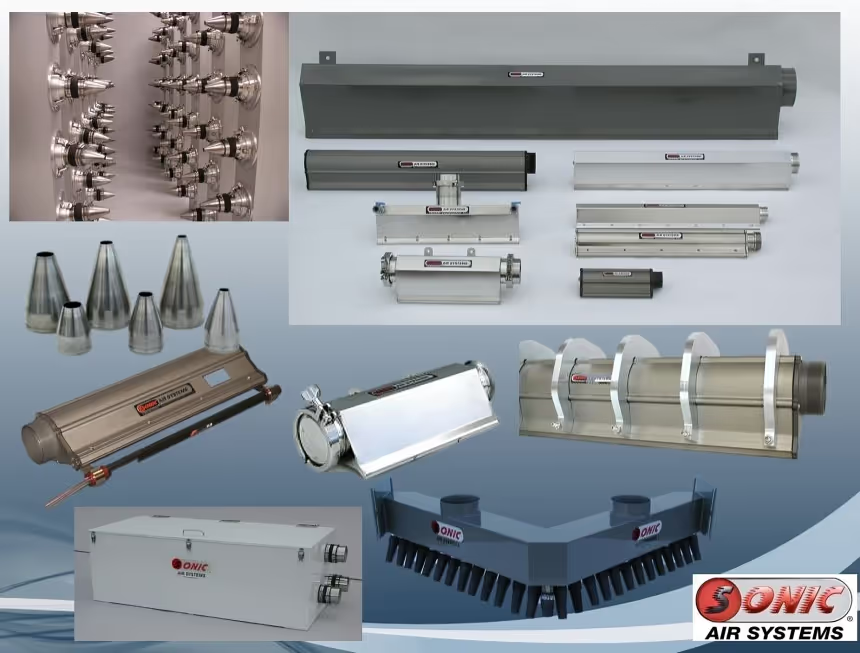
Forced ambient air knives are built for mechanical removal, with very little evaporation. Free surface water, rinse residue, condensation, and excess viscous solutions are all sitting on top of a part rather than absorbed into it, which makes them a job for velocity, not heat. High-velocity air knives running in the 28,000 to 38,000 FPM range can strip water off bottles, tires, wheels, cable, and sheet stock at production line speeds without specifically adding supplemental heat. If the moisture is on the surface and the part is non-porous, forced ambient air is almost always the more efficient answer. Adding heat here doesn't dry the part any better; it just adds energy cost and, in some cases, a cure risk you don't usually need to introduce.
When Heat Becomes the Deciding Factor
Three variables tend to push an application from forced ambient air into forced hot air. Looking at all three together, rather than any one in isolation, is what actually determines the right system.
Coating Drying Process
.JPG)
Paints, inks, and other wet coatings don't dry the same way surface water does. The water has to migrate out of the coating and evaporate, not just get blown off the top. Blast that surface with high-velocity air and you risk blowing the coating off. With heating elements and no air, the coating will skin over: the outer layer looks dry while moisture is still trapped underneath, which shows up later as blistering, poor adhesion, or an inconsistent finish. Forced hot air knives let the coating flash dry the internal moisture, rather than just displacing what's only sitting on the surface.
Moisture Load
How much moisture is actually in play, and where it's sitting, matters as much as whether the part is wet. A thin film of rinse water is a different problem than a part that has absorbed moisture into a porous surface, or a slurry or paste that needs to actually lose volume before it's considered dry. The heavier or more embedded the moisture load, the more likely the application needs heat to drive real evaporation rather than mechanical displacement.
Line Speed
Dwell time and moisture load are directly connected. A slower line gives forced ambient air more time to do its job, so some applications that would need heat at high speed can run on forced ambient air if the line is slow enough. Push the same part through faster, and there's less time in the air knife zone to remove the same amount of moisture, which is often where a plant that has run with forced ambient air for years suddenly finds it needs forced hot air after a speed increase or product design change.
Forced Hot Air Without the Energy Penalty
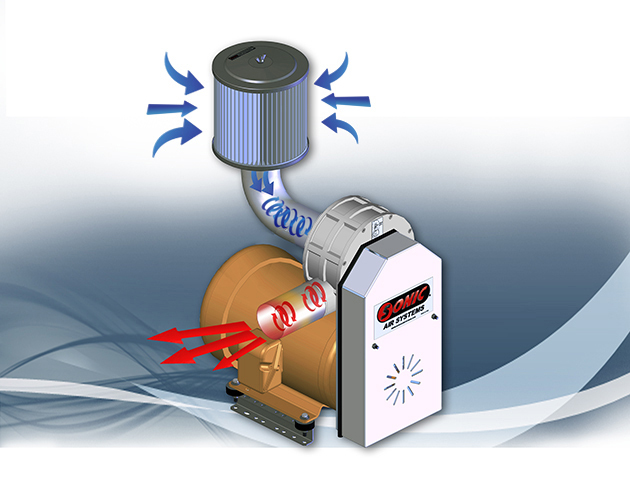
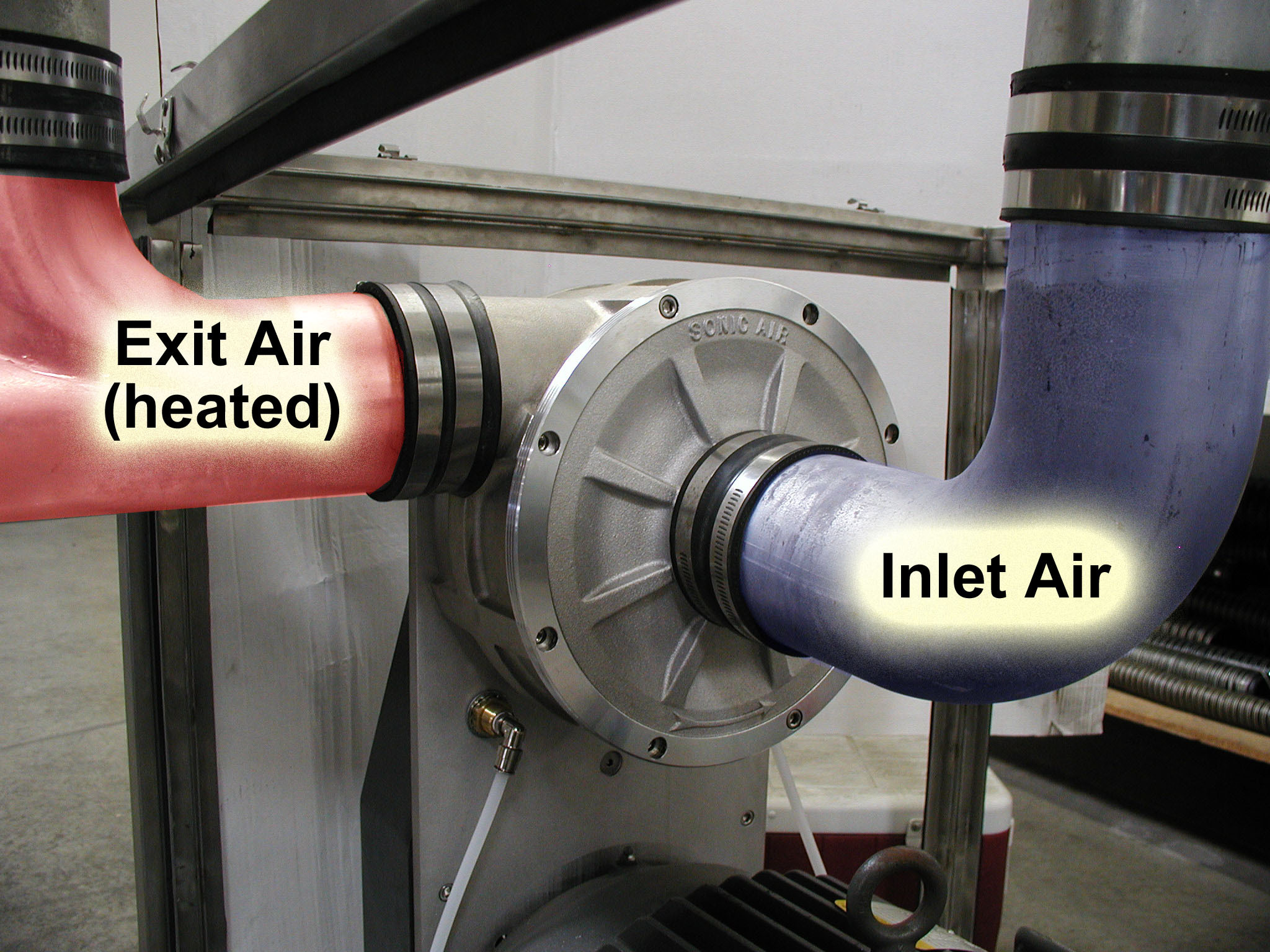
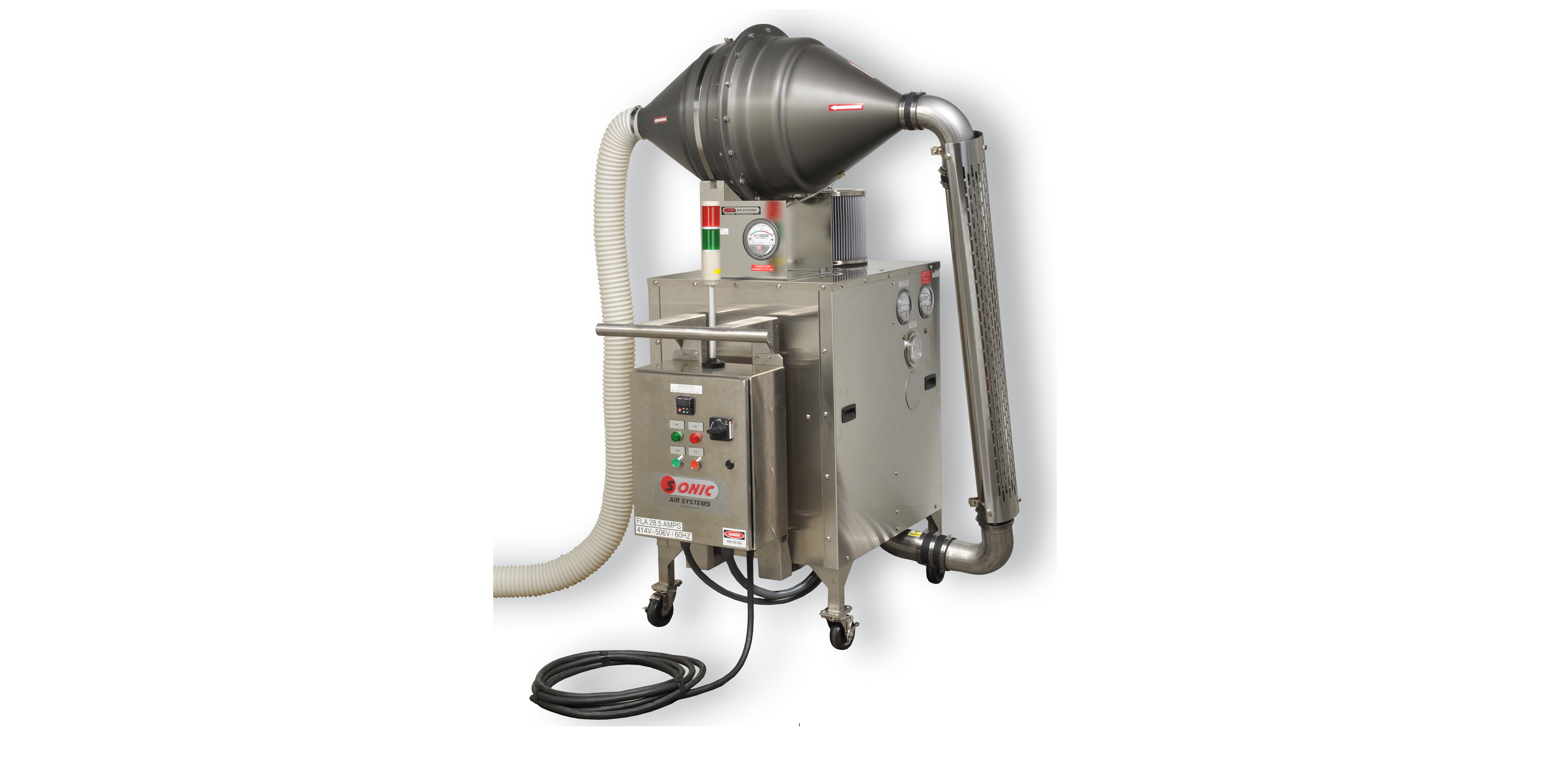
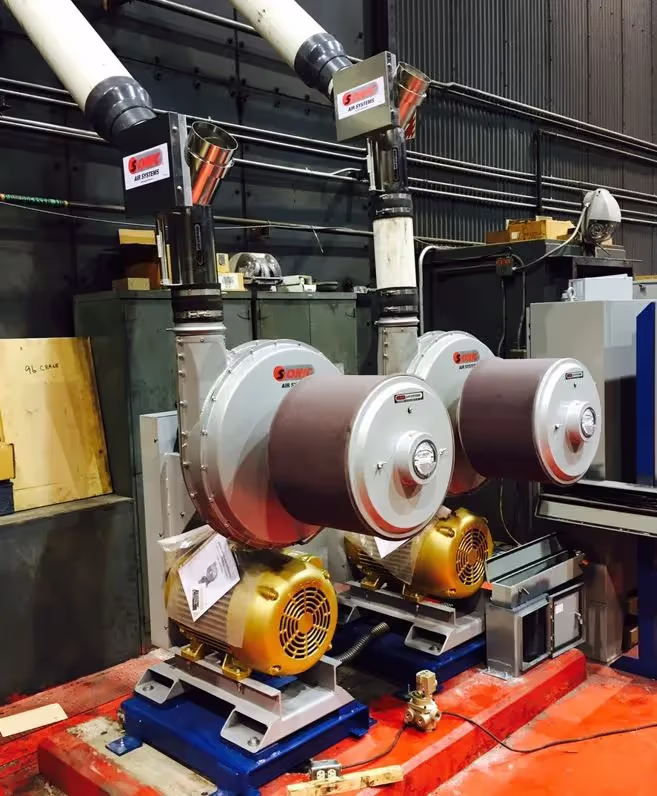
The usual objection to forced hot air is cost: inline electric heaters, gas burners, or steam coils can all add high ongoing energy demand, raise safety or process concerns, and take additional line space, all at considerable cost. Sonic's patented heater-less blower design gets around all of that by generating forced hot air, from 125°F to 275°F, through Sonic blower's natural heat of compression rather than an external heat source. That means a line that needs forced hot air to solve a coating cure or moisture load problem doesn't have to take on the energy and equipment cost of a traditional heater to get there.
Not Sure Which Your Line Needs?
Coating type, moisture load, and line speed rarely point in the same direction on their own, which is why most plants get this right by walking through the specific application rather than guessing from a spec sheet. If you're weighing forced ambient air against forced hot air for a drying or blow-off application, reach out to Sonic Air and we'll help size the right system for it.
.avif)
%201.avif)