How Hot Air Blower Systems Dry Tanks, Mixers, Blenders, and SS IBC Totes Work | Part 2 of 3
In this article
Every vessel type presents a different drying challenge after CIP. A 1,000-gallon mixing tank retains moisture differently than a ribbon blender. A conical blender has different dead zones than a paddle mixer. SS IBC totes present their own geometry and access constraints. As we covered in Part 1 of this series, CIP removes contaminants but leaves moisture behind in exactly the places that are hardest to reach and document. A drying system that addresses one vessel type does not automatically solve all of them.
This is why application engineering matters as much as the technology itself. Here is how Sonic's hot air blower drying systems approach the most common vessel types in pharmaceutical, food, and nutraceutical processing.
The Core Technology: Forced Convective Hot Air Drying
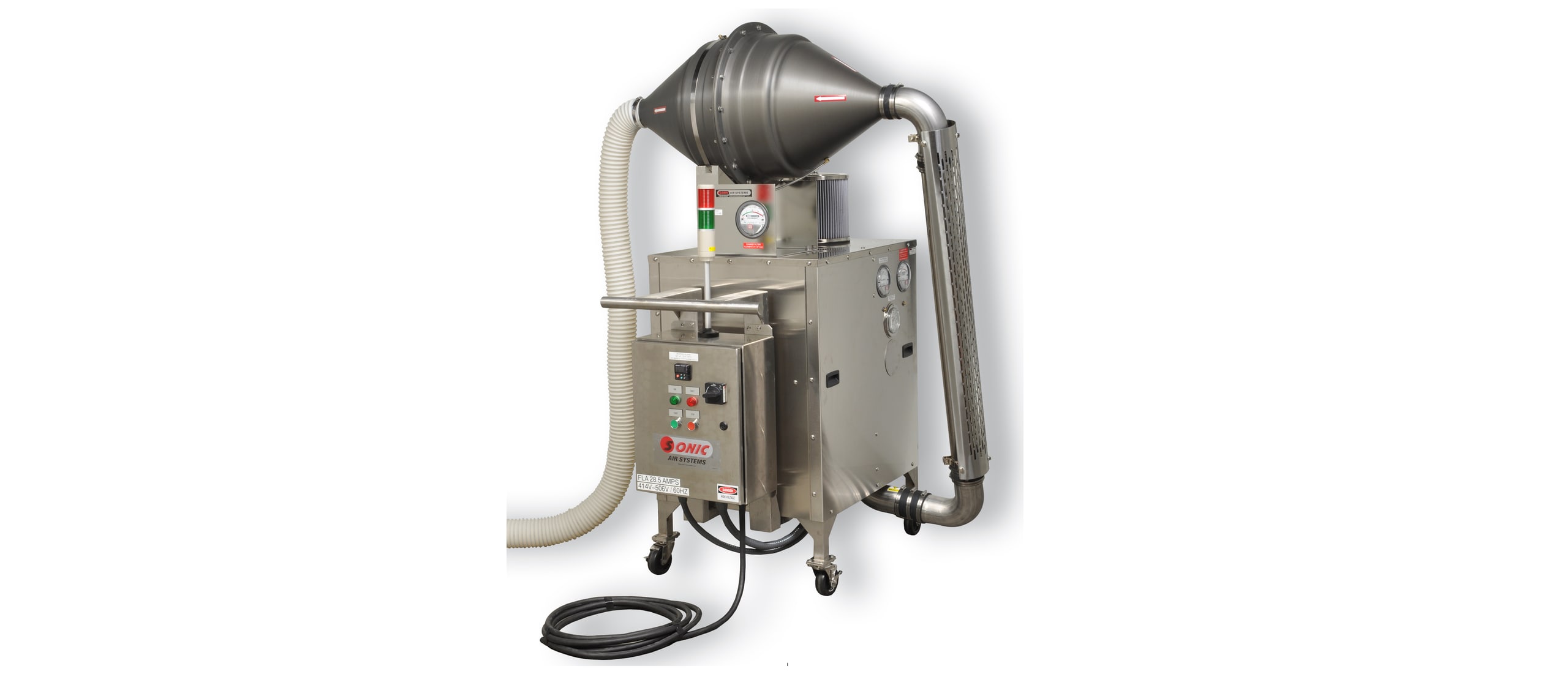
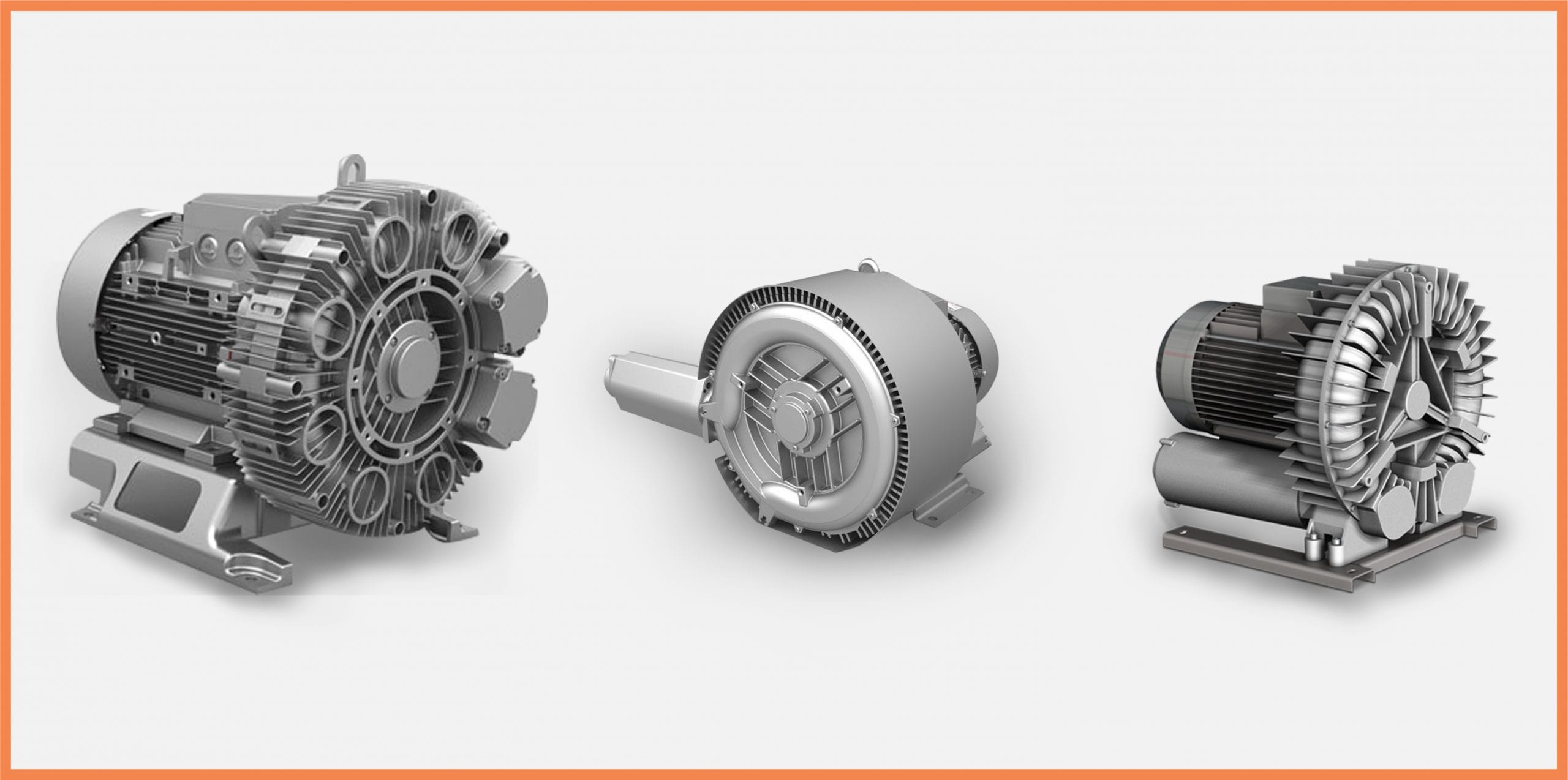
All of Sonic's vessel drying systems are built on the same engineering principle: forced convective drying using adiabatic heat of compression. Centrifugal blowers generate heat as a natural byproduct of compression, producing discharge air at 150 to 200 degrees Fahrenheit without any type of heating element, electric coil, or gas-fired heater. Every component in the system stays within a few degrees of the discharge air temperature, making the technology intrinsically safe for facilities handling flammable materials or operating in classified areas.
The DRY-IN-PLACE Tank Dryer system delivers this air at 1 to 4 PSIG directly into vessels and through connected piping circuits. At that pressure and temperature, the system achieves dramatically greater mass flow per unit of energy than compressed air while covering complex geometries that high-pressure nozzles cannot reliably reach. An in-line HEPA filter option (0.3 micron, 99.97 percent efficiency, MERV 17) maintains intrinsically clean air throughout the drying cycle for pharmaceutical and nutraceutical applications with strict contamination control requirements.
Mixing Tanks and Storage Tanks
Spherical tank heads and vertical cylindrical vessels retain moisture across internal surfaces even after extended drainage. The areas around nozzles, manways, agitator mounting points, and any internal baffles or supports are consistent retention points that natural evaporation and compressed air nozzles do not reliably reach.
The DRY-IN-PLACE system connects to the vessel through an existing inlet port and delivers a continuous, controlled hot air stream that circulates through the entire internal volume. For a typical 1,000-gallon mixing tank, the drying cycle runs 5 to 30 minutes. For tank farms requiring centralized drying across multiple vessels, the system can be configured with a central blower and distribution manifold, with individual branch connections to each tank.
Ribbon Blenders and Paddle Mixers
Horizontal blenders present some of the most demanding post-CIP drying challenges in industrial processing. The ribbon or paddle agitator creates retention zones at mounting points, end plates, and shaft seal areas that drainage and compressed air cannot consistently address. The full internal length of the vessel, often 8 to 15 feet or longer, requires complete air coverage to meet validation standards.
Sonic's approach to ribbon blender and paddle mixer drying is to deliver a continuous hot air stream through the vessel inlet while the agitator rotates slowly during the drying cycle. The combination of circulating hot air and slow agitation ensures full coverage across all internal surfaces, including the dead zones around agitator mounting hardware. Drying time for most horizontal blender configurations is under 30 minutes.
For nutraceutical applications specifically, this approach supports the GMP requirement for consistent, documented cleaning validation, replacing operator-dependent compressed air methods with a repeatable, measurable process.
Conical Blenders and Cone Mixers
The conical geometry creates favorable drainage characteristics but introduces drying challenges at the cone apex and discharge valve assembly. Moisture collects at the lowest point of the cone, around the discharge valve seat and valve body, and in the connected product piping. These areas are the most difficult to verify visually and the most likely to fail swab testing if not dried completely.
DRY-IN-PLACE configurations for conical vessels include application-specific nozzle placement to direct airflow into the cone section and through the discharge valve and piping circuit. The system addresses the full drying requirement in a single cycle, including the piping downstream of the vessel that a nozzle-based approach would require separate treatment for.
SS IBC Totes
Stainless steel IBC totes (intermediate bulk containers) are one of the most widely used transfer vessels in pharmaceutical, nutraceutical, and food processing. Their internal baffles, fill ports, vent connections, and outlet valve assemblies create moisture retention points after CIP that natural evaporation and compressed air cannot reliably address within reasonable production timeframes.
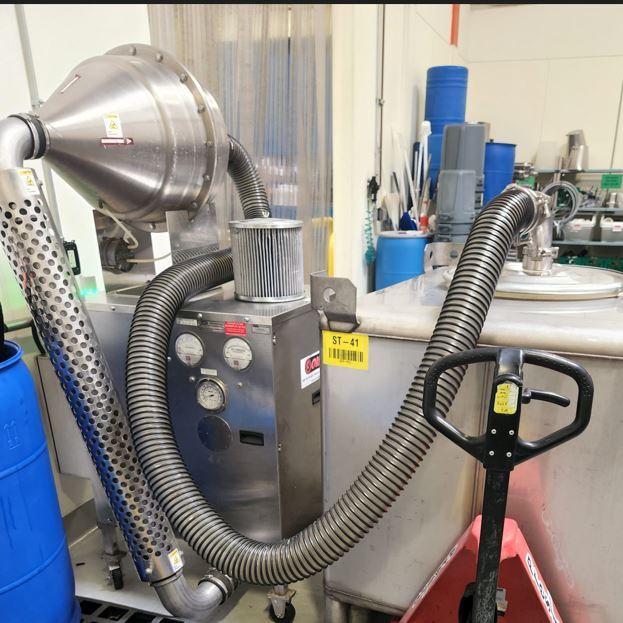
Sonic's hot air blower system dries SS IBC totes by delivering temperature-controlled airflow through the fill or vent port while moisture exits through the outlet connection. The system reaches the internal baffles and all outlet valve surfaces, where moisture retention is highest. Drying cycles for most SS IBC configurations run 5 to 25 minutes, supporting high-throughput tote cycling in facilities that process multiple batches per shift.
Note: Sonic's current DRY-IN-PLACE system is designed for stainless steel IBC totes. Plastic IBC totes present different material and pressure constraints that require a separate engineering approach.
System Configuration Options
The DRY-IN-PLACE system is available from 10 to 25 HP (7.5 to 18.5 kW), covering the full range of vessel sizes common in industrial processing. Standard configuration options include:
- Portable cart-mounted system: for facilities with multiple vessel types or locations requiring flexible deployment
- Stationary installation: with fixed piping for dedicated drying stations with consistent throughput requirements
- Central blower with distribution manifold: for tank farms requiring simultaneous or sequential drying across multiple vessels
- In-line HEPA filtration: for pharmaceutical and nutraceutical applications requiring 99.97 percent / 0.3-micron air purity (MERV 17)
- Predictive maintenance monitoring: built-in alerts for system irregularities to reduce unplanned downtime
- Motor controls and VFD options: for integration with facility PLC or automation systems
Why Application Engineering Comes First
A system specified for a 500-gallon mixing tank will not perform correctly on a 3,000-gallon ribbon blender. A portable cart configuration that works for a single vessel will not support a tank farm requiring simultaneous drying across multiple circuits. The vessel type, CIP circuit layout, production frequency, and facility constraints all affect system design.
Sonic provides a comprehensive technical evaluation for every application: vessel geometry assessment, CFM calculations, custom air piping design, and full ROI analysis. Every installation is engineered to the specific application, not adapted from a standard catalog configuration.
For the full energy and labor cost comparison between compressed air and hot air blower drying, see Part 3: Compressed Air vs. Hot Air Blower Drying: A Real Cost Comparison.