
Medical Industry Blow Off System
Air Knife and Blow-Off Systems for Medical Device and Pharmaceutical Manufacturing

Medical and pharmaceutical manufacturing lines carry a level of consequence that general industrial environments do not. The components moving through your facility are surgical instruments, medical cables, pharmaceutical containers, and optical components that go directly into patient care or drug production. The blow-off and drying systems that touch them have to meet a different standard.
Sonic Air Systems designs and deploys air knife systems for medical device manufacturers, pharmaceutical producers, and clean room assembly operations across the country. Our systems replace compressed air with blower-powered, HEPA-filtered air knife technology that is oil-free, moisture-free, and engineered to meet the cleanliness requirements your products and facilities demand. Sonic Air Systems employs Good Manufacturing Practices (GMPs), which help ensure that all of our products meet the highest standards for performance and reliability.
Medical Device Blow-Off and Drying: Sonic’s Three Core Capabilities

Sonic deploys solutions across the full range of medical device and pharmaceutical application types, including surface liquid blow-off (air knife drying) for conveyed products, anti-static air washing to remove surface particles during manufacture, vacuum containment to collect dislodged airborne particulates, hot air evaporative drying (hot air blowers), tank and tote drying after CIP using Sonic DRY-IN-PLACE systems, and product air cooling as a replacement for liquid parts cooling (COOL-AIR blowers). Sonic blower systems are engineered for the widest range of applications.
HEPA Air Wash for Medical Devices and Pharmaceutical Environments
Sonic’s inline HEPA filters deliver 99.97% filtration efficiency at 0.3 microns, the cleanliness threshold required for pre-packaging of most medical devices. For applications requiring finer filtration, Sonic’s ULPA filters achieve 99.99% efficiency at 0.12 microns. Blower systems with sanitary air knives are available.
Ionizing Air Knife Systems for Static Neutralization

Many medical products carry a static charge that binds particles to the surface even after standard blow-off. This is common with plastics, cables, films, and lenses. Sonic’s ionizing air knife systems combine high-velocity air delivery with an ionizing bar that neutralizes the surface charge first, so the subsequent blow-off removes the released debris cleanly. In clean room configurations, a vacuum manifold below the blow-off zone captures all dislodged particulates before they can resettle elsewhere in the controlled environment. This push-pull air wash design is another Sonic specialty.
Stainless Steel Component Designs for Sanitary Washdown Requirements
Where sterilization, chemical washdown, or material compatibility is required, Sonic stainless steel air knives and other point-of-use air delivery components can be coupled to the inline HEPA air supply using either medical grade silicone sleeves with clamps or sanitary ferrule connectors with quick-release tri-clamps designed to meet 3-A cleanability standards for remote COP (clean out of place) wash tanks. This configuration supports full compliance with hygiene and sanitation audit requirements.
Medical Devices and Products Where Sonic Blower, HEPA Air Knife Systems Are Utilized
Medical Device Drying, Static Neutralizing, Blow-Off, and Air Wash
- Medical cables, surgical cords, and surgical instruments
- Medical grade filter media and membrane
- Scalpels and needles
- Sharps containers after cleaning
- Optical components and precoated lenses
- Contact lens pallets
- I.V. pouches and flexible medical packaging
- Prosthetics and orthopedic components
- Disposable medical device components, including brushes, sponges, and applicators
- Lab test slides, trays, and totes after each cleaning cycle
Pharmaceutical and Nutraceutical Drying Applications
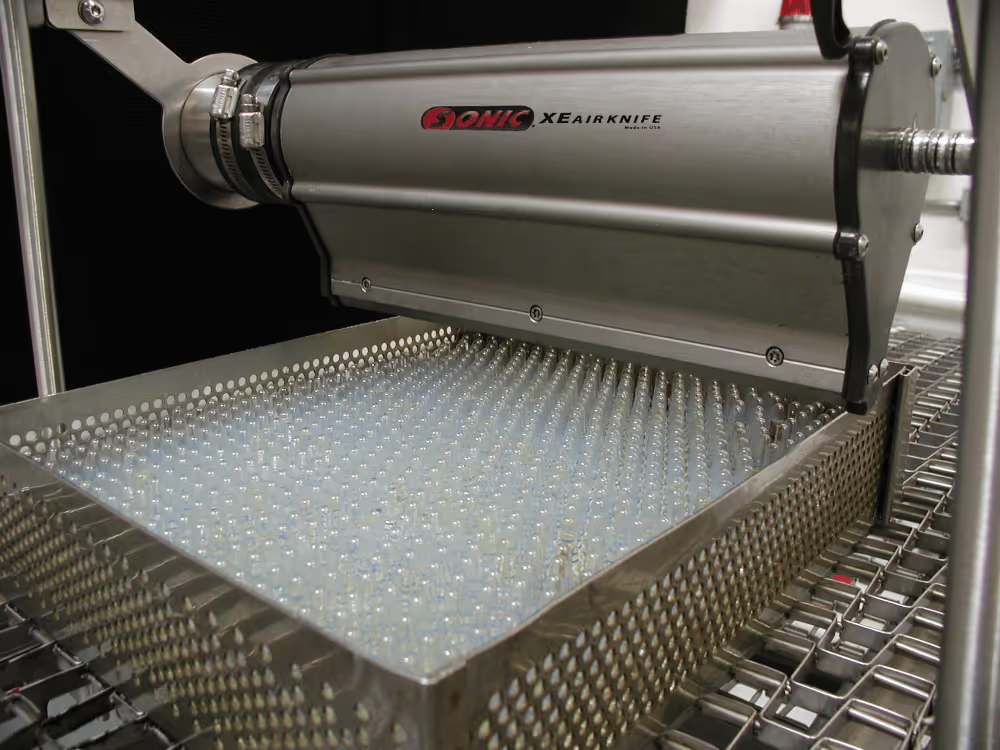
Sonic air knife systems are also used in pharmaceutical manufacturing environments where containers, components, and assemblies require drying or blow-off as part of the production process. Common applications include:
- Ampules and vials after filling and rinsing, prior to packaging
- Large volume mixers, blenders, and totes after each CIP process
- Conveyor belts, carry trays, and other critical contact surfaces on continuous production loops after each spray cleaning cycle
These applications share the same core requirements as medical device blow-off: oil-free air, consistent coverage, and in some cases HEPA filtration where cleanroom or controlled environment standards apply. Sonic systems can be configured to meet those requirements using the same stainless steel air knife and blower platform used across the medical device applications on this page.
How a Sonic Medical Industry Blow-Off System Is Configured
A Sonic medical device blow-off or drying system is built around one or more of the following components: a centrifugal blower, an inline HEPA or ULPA filter, one or more air knives or ionizing air knives, and where the environment requires it, a vacuum manifold with exhaust blower and an enclosure or tunnel to contain airborne moisture or particulate removed from the product surface.
Blower-powered air is inherently cleaner than compressed air. It carries no moisture or oil carryover, requires no pressure regulation, and runs at consistent output regardless of what else is happening on the facility’s compressed air line. The HEPA filter downstream of the blower brings air cleanliness to 0.3 microns before it contacts the product. The air knife then delivers that filtered air at exit velocities between 28,000 and 38,000 FPM, sufficient to strip particulates from surfaces without any physical contact.
For statically charged products, the ionizing bar upstream of the air knife introduces positive and negative ions into the air stream. When the ionized air contacts the product surface, it neutralizes the charge, and the subsequent blow-off removes the released debris cleanly and completely.
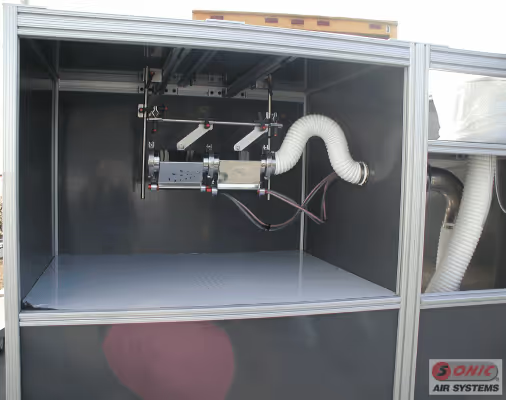
In clean room configurations, the blower and dust collector are mounted externally to the controlled space. Only the air knives and minimal piping sit inside, keeping heat load and footprint within the clean room to a minimum.
Medical Industry Blow-Off System: Verified Applications
Clean Room Blow-Off with Ionized Air and HEPA Filtration: Kirwan Surgical Products, Marshfield, MA
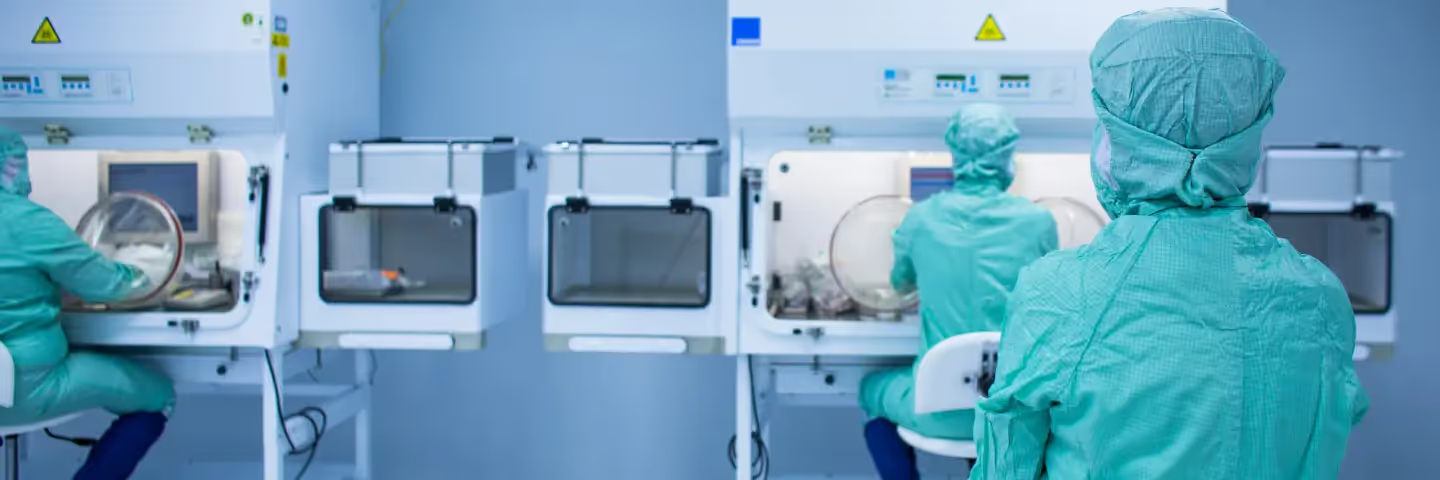
Kirwan Surgical Products, a manufacturer of microsurgical instruments for neurosurgery, ophthalmology, and orthopedic surgery, needed a cleanroom blow-off system for its cable assembly operation. Thermoplastic rubber bipolar cords were accumulating dust and debris during processing and contaminating final packaging. Standard blow-off was insufficient because a portion of the debris was statically bonded to the cord surface.
Sonic engineered a system using a Sonic blower powering four middle-inlet air knives across four separate packaging tables. Blower air was passed through a HEPA filter to achieve 0.3 micron cleanliness at the knife exit. An ionizing bar neutralized the static charge on each cord before blow-off, releasing the bound debris. A vacuum manifold below each station captured all dislodged particulates. The blower and dust collector were mounted externally, with only the air knives and piping operating inside the clean room.
Essilor also runs Sonic blower-powered air knife systems in its optical components and precoated lens manufacturing facilities. Edwards Lifesciences has deployed Sonic static-neutralizing rotary air knife systems in its surgical components assembly process.
Medical Device Drying with a Sanitary Air Knife System: Team Technologies, Tennessee
%20(1)%20(1).png)
A medical device automation company required a drying system for disposable toothbrush sponges moving at 20 parts per minute. Each sponge was dipped in a paste solution and needed to dry completely within a 6 to 8 second window before the next process stage.
Sonic deployed a blower using the Variable Temperature (VT) design, which raises outlet air temperature to 200°F without an external inline heater. Two sanitary air knives delivered heated, high-velocity air across the sponges. The product was fully dry within 2 seconds of dwell time. The sanitary knife construction allowed fast cleaning between production runs.
B. Braun Medical has deployed a Sonic VT blower-powered air knife system to dry I.V. bags. Johnson & Johnson and Bausch + Lomb have each deployed multiple Sonic sanitary air knife drying systems in their contact lens and lens pallet production processes.
Why Medical Device Manufacturers Replace Compressed Air with Air Knife Systems
Compressed air is present in most facilities and often becomes the default option for blow-off. In medical device cleaning and drying applications, it creates problems that are difficult to solve without changing the approach entirely.
Compressed air carries moisture and oil from the compressor. It operates at high pressure relative to the work being done, driving up energy costs. Nozzle-based delivery concentrates air into a narrow stream, leaving gaps in coverage and requiring precise positioning that drifts over time.
A Sonic blower-powered air knife system delivers a continuous, uniform curtain of oil-free, moisture-free air across the full product width. Energy consumption is a fraction of an equivalent compressed air installation. A Sonic 70 with a 10 HP motor replaces the work of a 40 HP compressor in comparable drying applications. For facilities managing pressure drop issues or compressed air budgets across multiple lines, moving medical device blow-off to a dedicated blower removes that line from the dependency entirely.
Air Knife System Components for Medical and Pharmaceutical Applications
Air knives: 2" and 3" XE in 300 Series stainless steel; 3" Sanitary Air Knife (3-A compliant); Static Control Air Knife with ionizing bar for static neutralization in clean room environments
Filtration: HEPA inline filter (99.97% at 0.3 micron); ULPA inline filter (99.99% at 0.12 micron)
Blower models: Sonic 70 through Sonic 300, 3 HP to 50 HP depending on system scale; Variable Temperature (VT) variants where heated air is required without an external heater
System accessories: Vacuum manifold for particulate collection in clean room environments; stainless steel piping, fittings, and flex hoses; external blower mounting configurations; pressure monitors and Predictive Maintenance Monitor (PMM)
Get a Medical Device Blow-Off System Engineered for Your Application
Every medical and pharmaceutical application has its own constraints based on product geometry, production rate, clean room classification, and material requirements. Sonic’s engineering team works from the application outward to specify a system built for it.
Case Studies For Industry-Related Practical Applications