Blower Motor Controls

Turnkey Blower Motor Control and Air Knife System Solutions
Sonic delivers customized controls and drives.
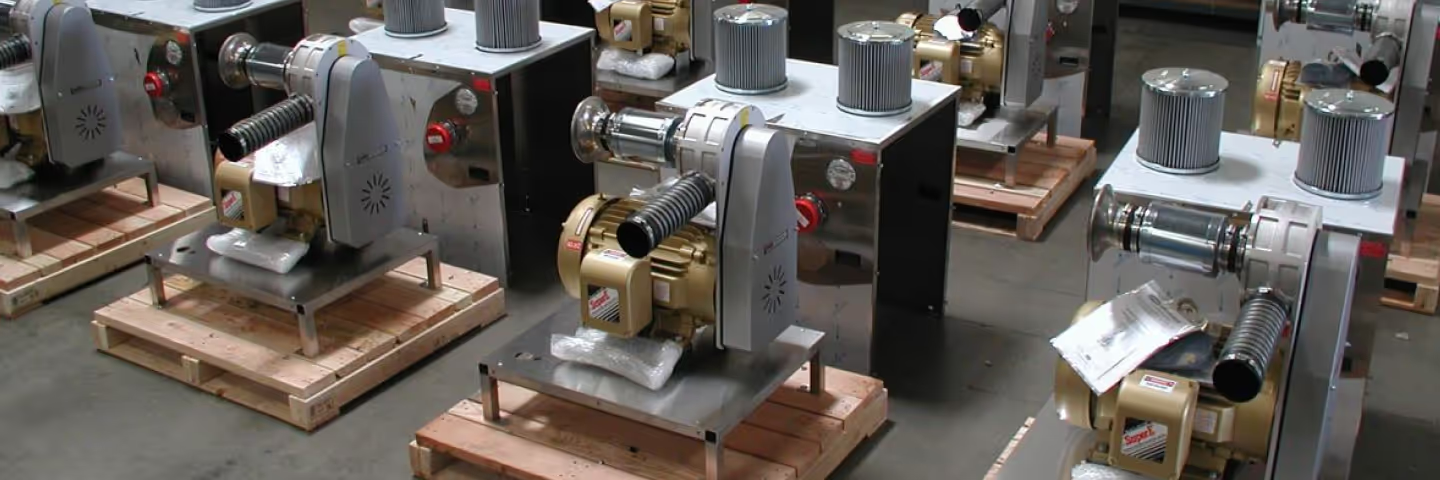
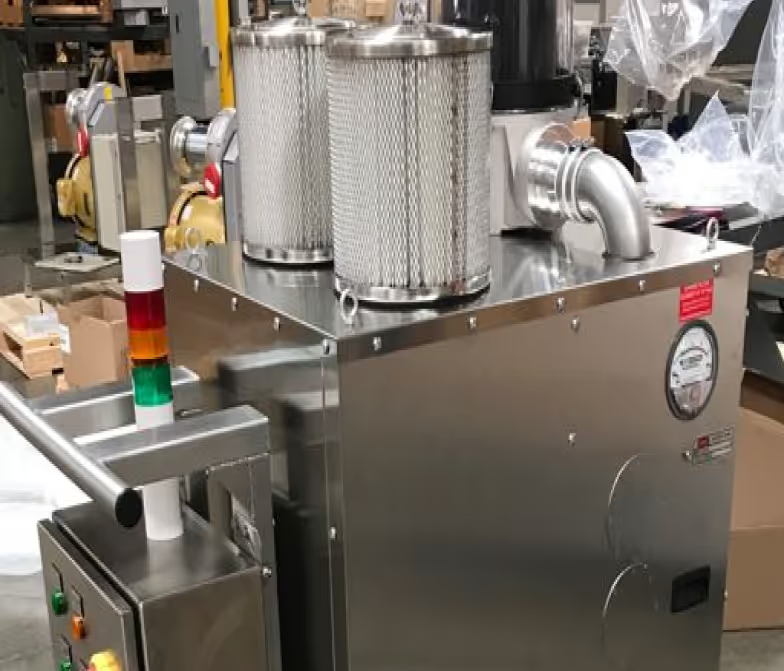
Most Sonic customers supply their own company standard basic motor starters, soft starters, or variable frequency drives. As a trusted motor control product supplier, Sonic usually provides these products when they are either mounted by Sonic to the blower enclosure or are highly customized to unique operating and monitoring requirements for Sonic custom blower packages.
Smarter Motor Controls for Superior Blower Performance
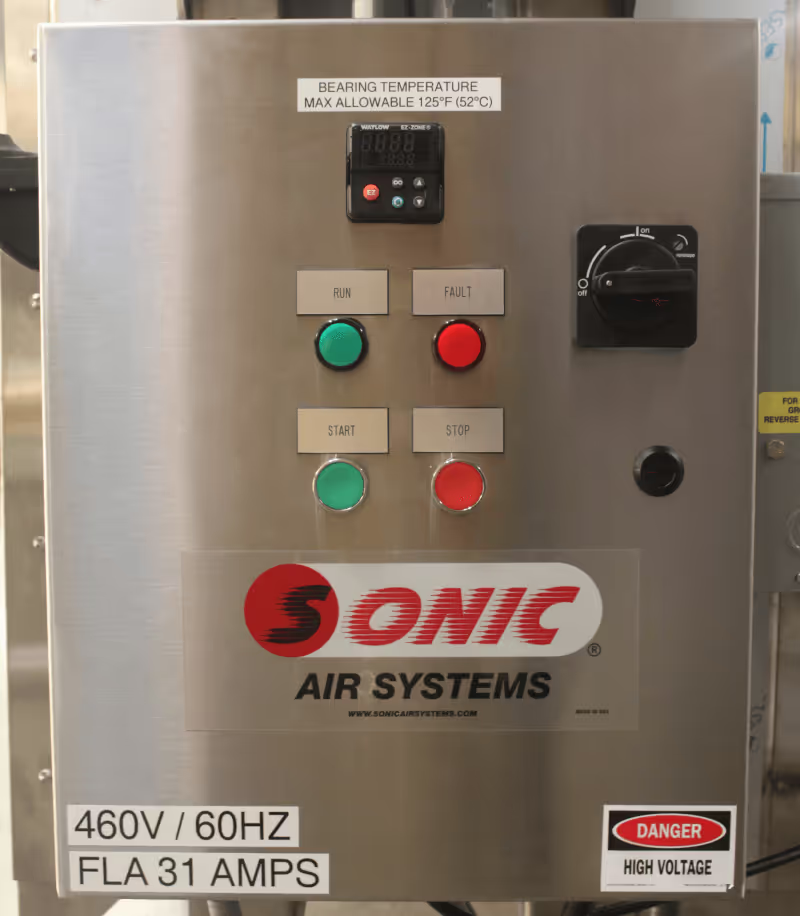
Sonic Air Systems’ blower motor controls are engineered to deliver precision airflow management across industrial processes that require consistent, adjustable blower performance. These smart controls govern blower speed, start/stop cycles, and fault monitoring using advanced electronics that adapt to real-time demands. Ideal for drying, cooling, static control, and coating applications, the system allows operators to fine-tune operations with greater ease, enhancing energy efficiency and process consistency across multiple sectors, including packaging, bottling, and manufacturing.
How Blower Motor Controls Improve Every Application
- Intelligent Variable Speed Control: Automatically adjusts blower motor speed based on application load. This real-time optimization reduces wear and improves adaptability across changing production needs.
- Digital Fault Monitoring System: Continuously tracks voltage irregularities, motor overloads, and other operational anomalies. Alerts are relayed through system indicators to reduce downtime.
- Programmable Soft Start/Stop: Gradually ramps the blower up to full speed or down to a stop to reduce mechanical stress. This protects internal components and extends motor lifespan.
- Lower Operating Costs: By delivering only the required airflow, you reduce energy usage without sacrificing performance, leading to measurable cost savings.
- Faster Maintenance Response: Technicians can quickly identify and resolve issues, minimizing disruptions and protecting the motor from serious damage.
- Increased Equipment Longevity: Smooth transitions minimize wear and tear, lowering repair frequency and keeping production lines running longer without interruption.
- Better Workflow Control: Operators gain the ability to monitor and adjust blower settings remotely, improving oversight and productivity.
How to Select the Right Industrial Diverter Valve
Determining the best valve for your system depends on balancing air volume, pressure, and material characteristics. When these factors align, you achieve smoother performance, higher efficiency, and long-term reliability. The ideal configuration not only maintains consistent airflow and minimizes pressure loss but also enhances energy efficiency across continuous production cycles.
Common Types of Diverter Valves
- Flap Type Diverter: Simple, cost-effective valve ideal for low- to medium-pressure systems handling powders, pellets, or airflows requiring gentle redirection.
- Plug (Rotor) Diverter: Designed for continuous-duty applications, offering smooth switching between lines with minimal leakage.
Slide or Slideflex Diverter: Provides fast, tight-sealing transitions for high-pressure or high-temperature processes where precision airflow management is essential.
Key Technical Considerations
When specifying an industrial air diverter valve, consider the following engineering factors to ensure long-term reliability:
- Material Compatibility: Choose materials suited to your process—aluminum for lightweight efficiency, stainless steel for hygienic or corrosive environments, or coated alloys for chemical resistance.
- Actuation & Automation: Sonic offers manual, pneumatic, or automated actuation to integrate with PLC or sensor-driven systems for instant airflow control.
Sealing & Maintenance: Valves are designed with precision-fit components and replaceable seals to maintain efficiency and reduce downtime during maintenance intervals.
View Case Studies

Frequently Asked Questions
Yes. Sonic butterfly valves can operate in conjunction with a VFD for blower speed control; however, they can also function as the sole airflow control device. As a low-cost alternative to a VFD, the butterfly valve allows operators to manually fine-tune air velocity and pressure, setting the optimum airflow level during the initial system setup without relying on expensive electronic controls.
The Sonic Y-Verter™ is a mechanical alternative to Variable Frequency Drive motor controllers traditionally used in blower and air knife systems. It allows rapid, reliable airflow redirection between system branches without changing motor speed, reducing complexity and maintenance requirements compared to VFD-based systems.
A Y-Verter™ is particularly effective when using standard 3,600 RPM, 60 Hz motors where air control needs can be met through mechanical redirection rather than motor speed modulation. While certain high-speed blower motors (up to 20,000 RPM) may require VFDs with output frequencies up to 330 Hz, many air knife applications can achieve equal or better airflow management with the simpler, more durable Y-Verter™ system.
Yes. They can be integrated with most industrial blowers or pneumatic systems, and custom configurations are available for unique operating conditions.
Blower Motor Controls

Turnkey Blower Motor Control and Air Knife System Solutions
Sonic delivers customized controls and drives.
Most Sonic customers supply their own company standard basic motor starters, soft starters, or variable frequency drives. As a trusted motor control product supplier, Sonic usually provides these products when they are either mounted by Sonic to the blower enclosure or are highly customized to unique operating and monitoring requirements for Sonic custom blower packages.

Smarter Motor Controls for Superior Blower Performance
Sonic Air Systems’ blower motor controls are engineered to deliver precision airflow management across industrial processes that require consistent, adjustable blower performance. These smart controls govern blower speed, start/stop cycles, and fault monitoring using advanced electronics that adapt to real-time demands. Ideal for drying, cooling, static control, and coating applications, the system allows operators to fine-tune operations with greater ease, enhancing energy efficiency and process consistency across multiple sectors, including packaging, bottling, and manufacturing.