Key takeaway
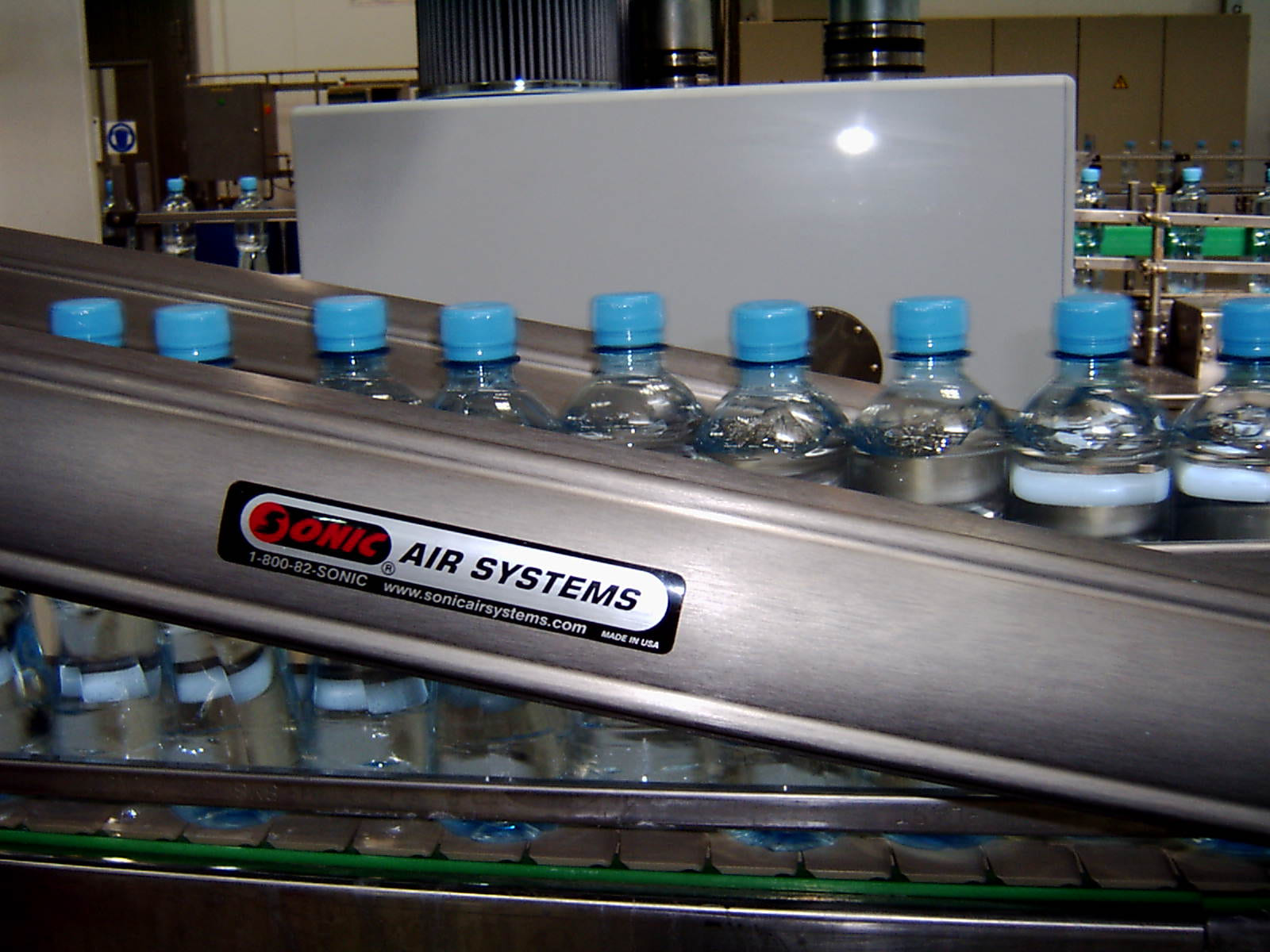
Sonic air knife systems dry cans, glass and PET bottles, cartons and large-format containers at line speeds from 50 to 2,000 containers per minute.
Air Knife Systems for the Beverage Industry
Engineered drying solutions for bottles, cans, pouches, and cartons from 50 to 2,000 CPM.
Tell us about your process and we'll follow up with a recommendation.
The beverage line brief
Engineered drying solutions for bottles, cans, pouches, and cartons from 50 to 2,000 CPM.
The drying challenge
Beverage packaging lines run fast and run wet. Cold-filled bottles pull condensation from the air before they reach the labeler. Pasteurized cans come off the spray water cooling tunnel still carrying surface moisture. At 1,500 containers per minute, residual moisture is not a minor inconvenience; it is the difference between the highest quality and production rates or a productivity disaster.
Compressed air blow-off is often the standard first attempt, and it routinely falls short. The air volume is insufficient, the coverage is inconsistent, and the operating cost compounds across every shift. Centrifugal blower-powered air knife systems produce high-velocity, high volume and uniform airflow across the full container profile at line speeds compressed air cannot match.
Process requirements
Sonic air knife systems dry cans, glass and PET bottles, cartons and large-format containers at line speeds from 50 to 2,000 containers per minute.
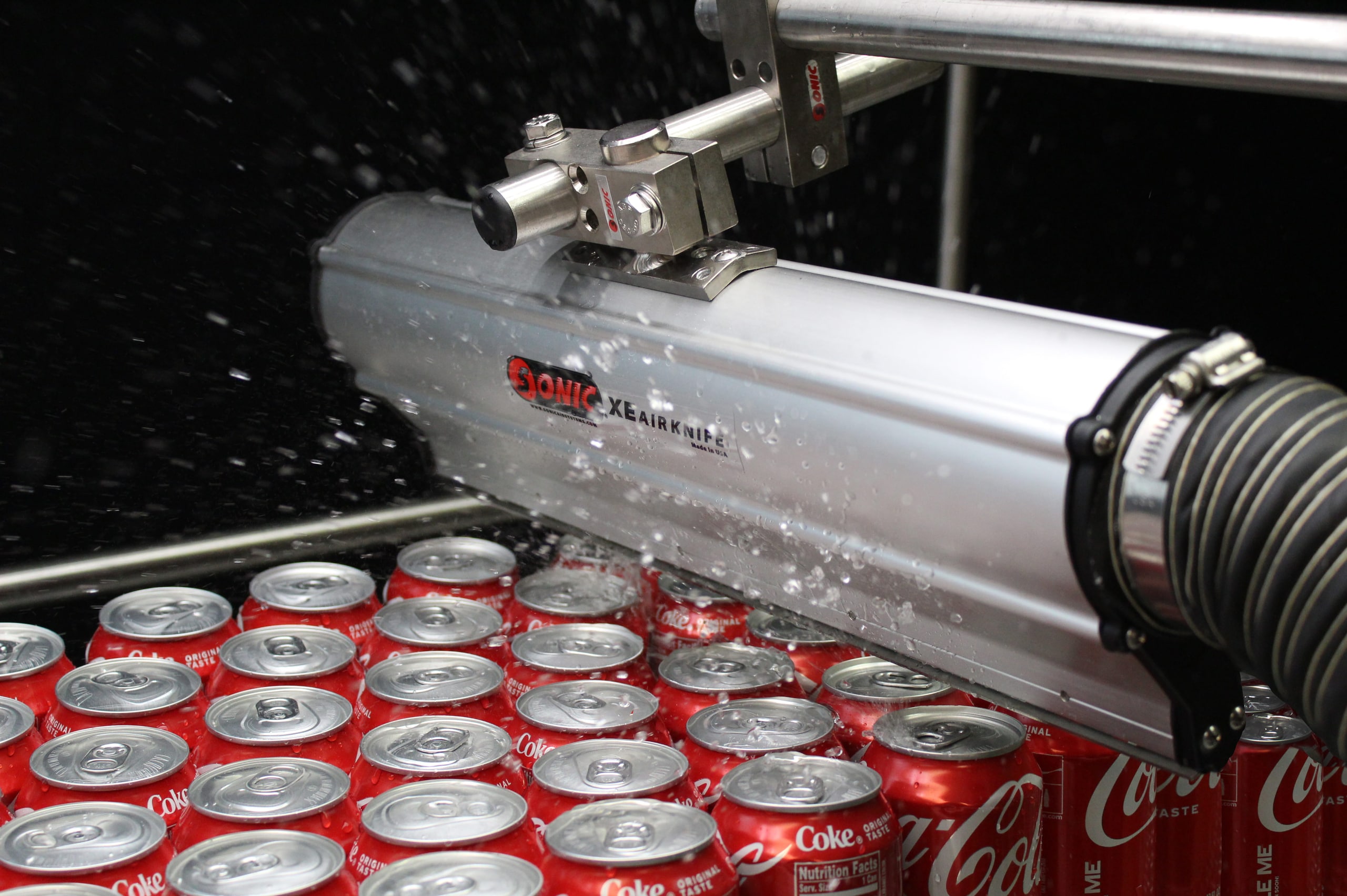
Centrifugal blower-powered air knives deliver high-volume, uniform airflow across the full container profile, where compressed air blow-off falls short on air volume, coverage and operating cost.
Drying at the right point on the line prevents label failures, smeared date codes, seal problems, poor shrink-sleeve finishes and stress corrosion on aluminium cans.
At Berentzen, two air knives powered by Sonic's patented heater-less Variable Temperature blower (about 160°F exit air) cleared ice and condensation from cold glass at 30,000 bottles per hour, so bottles no longer needed pre-warming.
Food and beverage systems with defined drying targets come with a written performance guarantee.
Moisture failure points
Moisture is not one problem on a beverage line. It shows up at the exact handoff where quality, coding, and throughput are decided.
Self-adhesive labels will not bond to a wet surface. Cold-fill glass bottles are particularly vulnerable: thick glass retains cold well past the fill station, and moisture from the ambient air re-condenses on the bottle surface even after an initial drying pass. PET bottles present a similar problem at high speed. A properly engineered air knife system removes surface moisture completely before the container reaches the labeler, regardless of ambient conditions or line speed.
Water droplets on the container surface at the point of inkjet coding cause ink spread, smearing, and misreads. For compliance-critical date codes and batch information, a failed code is a rework event. Pre-code drying with a targeted air knife station eliminates the unpredictability.
Residual chloride ions in recirculated cooling or warming tunnels and even condensation from cold filling accelerate stress corrosion in pull tab scoring areas of carbonated beverage cans. Complete moisture removal at the right point along the line is the most effective preventive measure available.
Water under a crown, cap or tamper-resistant seal creates conditions for contamination or seal failure. Driving water out from under the crown after rinsing presents different challenges versus just side drying.
A wet container is almost impossible to have proper sleeve label registration or produce a bubble free shrink sleeve finish. After exiting any steam shrink tunnel, although moisture blow off is easier, it is also important to have a dry surface for maximum graphics quality.
Container formats
Sonic air knife systems are configured for the full range of beverage containers and packaging formats:
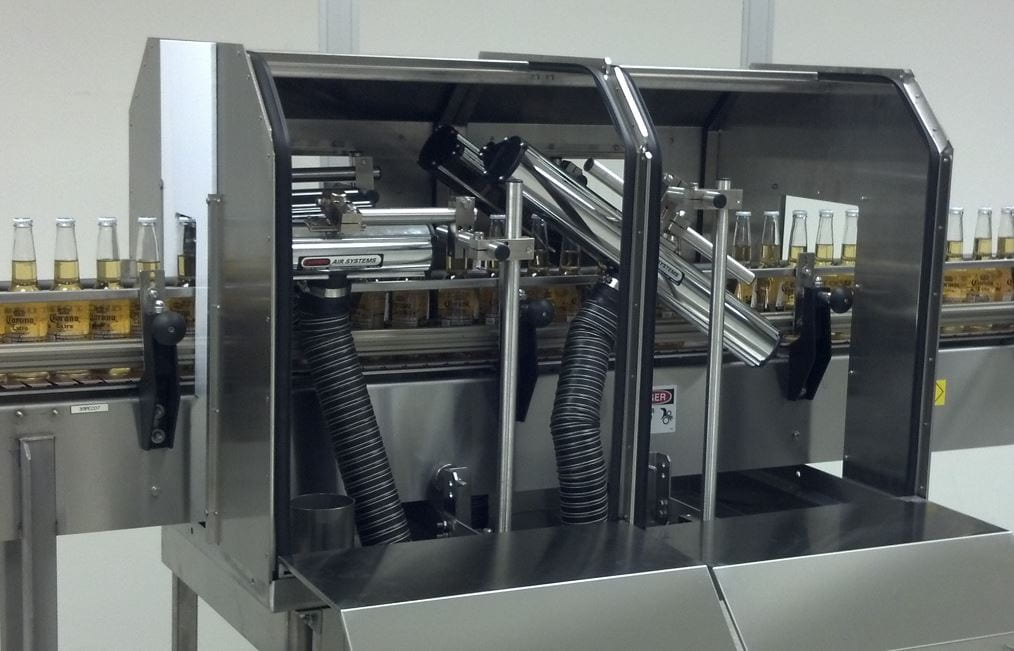
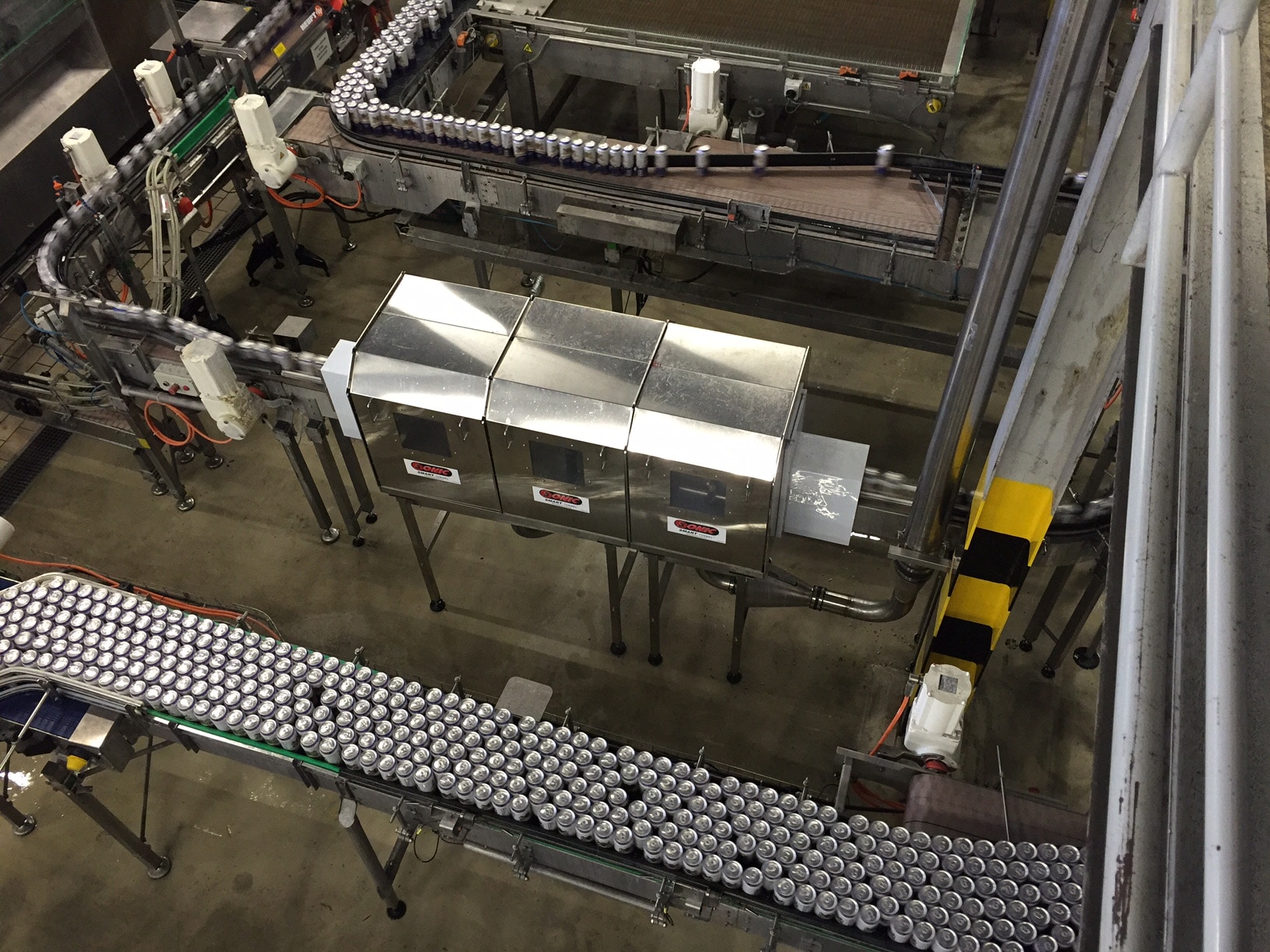
Dual Sonic blower units powering an air knife drying tunnel on a wine bottle conveyor line
System logic
The difference between compressed air and a centrifugal blower air knife system comes down to air knife volume and container impact air velocity. Compressed air delivers high pressure at low volume from a fixed point. A centrifugal blower delivers high-velocity, high-volume airflow across an air knife that is sized to suit whatever range of container and conditions are required. Every container gets the same level of drying treatment, every cycle, regardless of throughput rate.
Sonic's air knife systems for the beverage industry handle line speeds from 50 to 2,000 containers per minute. For applications requiring strict cleaning validation,stainless steel air knives and food-grade HEPA filtration are standard options. Aluminium air knives with hard anodized surfaces are available for applications that do not require 3A sanitary standards but still need dependable high-speed drying.
Sonic provides a written performance guarantee on food and beverage systems with defined performance targets, including the customer's specified level of drying.
Production proof
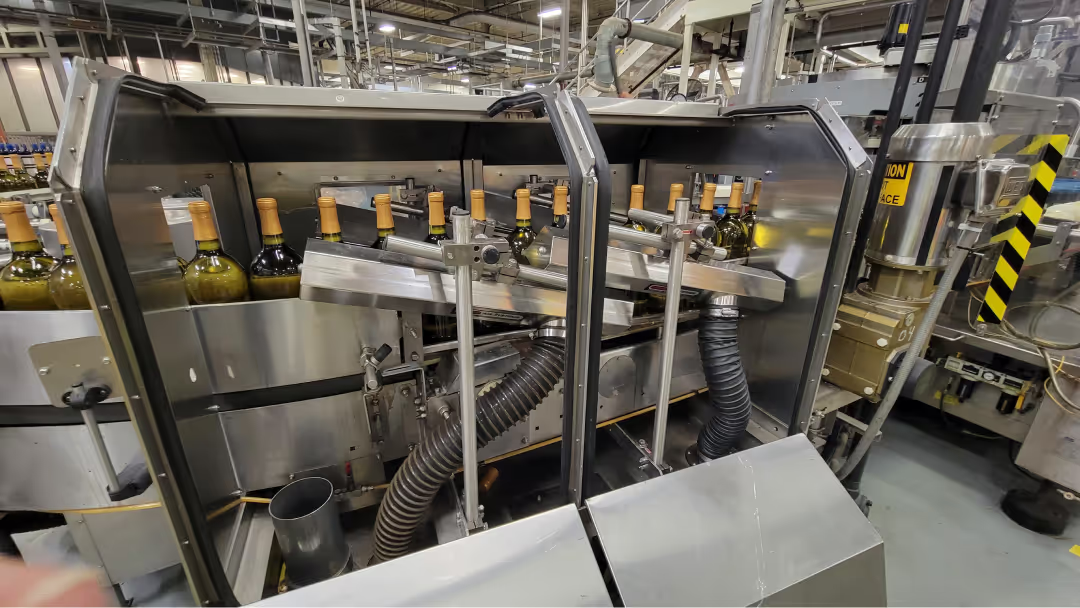
Cold Bottle Label Issues
Berentzen, one of Germany's premier distilled spirits producers, was losing production time to a condensation problem that had no simple fix. Their extra-thick glass bottles retained cold from unheated winter bulk storage, and a thin layer of ice would form on the bottle surface before labeling. Self-adhesive labels would not adhere, and the line could not start until bottles had been pre-warmed in a heated warehouse, a slow and costly workaround.
Sonic sized two air knives powered by a Sonic patented heater-less Variable Temperature Blower. The VT design raises exit air temperature to approximately 160 degrees F with no external heater required. At 30,000 bottles per hour, the system removed the ice layer and eliminated condensation before the label station. The pre-warming step was no longer needed.
Craft Brewing Convert From Compressed Air To Sonic
At Odell Brewing in Fort Collins, Colorado, bottling 12 oz and 22 oz bottles at 120 bottles per minute created a labeling consistency problem that a four-nozzle compressed air dryer could not resolve. Labels would flag or slip on wet glass, and packaging aesthetics were being compromised for a craft brand. Krones, Odell's labeling equipment manufacturer, recommended a Sonic blower and air knife system. Line speeds are now met without labeling issues.
For a detailed look at how these systems are configured for high-speed can and bottle lines, see Can and Bottle Drying Systems: A Technical Overview.
Can Line Dryer
Showing Beverage drying system image 1 of 8

In 1999, Odell Brewing switched from a compressed air dryer to a Sonic blower and air knife system to solve a labeling problem. The system is still in service today, 25 years later.
Read case study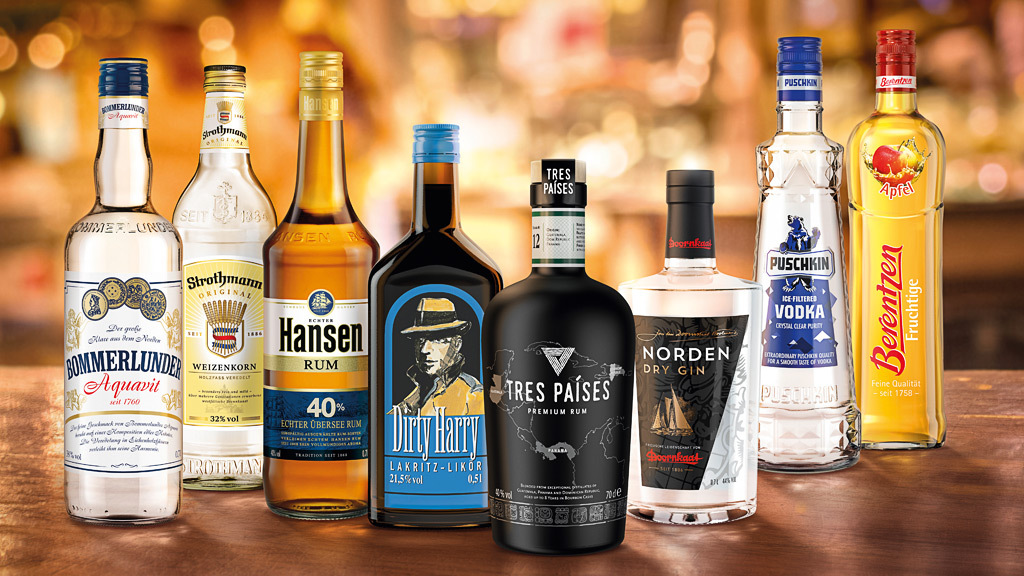
Berentzen's extra-thick glass bottles were arriving at the labeler with ice and condensation, stopping the line. A Sonic Variable Temperature air knife system solved it without any external heat source.
Read case study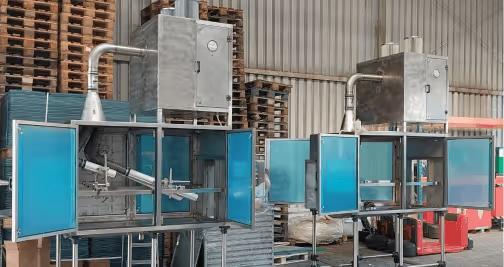
Find out how Sonic's wine bottle drying systems helped AMBRA S.A. achieve flawless bottle drying and streamline their production process.
Read case study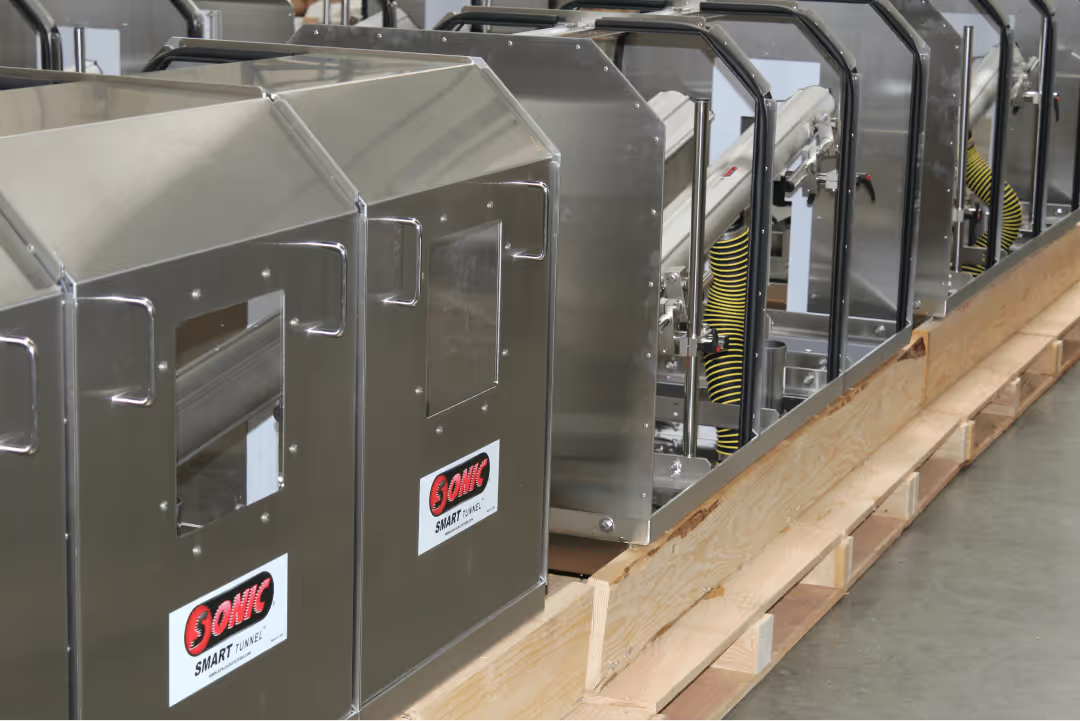
Learn how our PET bottle air knife drying systems optimize drying precision and enhance labeling accuracy in production.
Read case studyStart with the line
Tell us about your line speed, container type, and the specific stage where moisture is causing issues. Sonic engineers custom-configure every system and provides a written performance guarantee on systems with defined performance targets.