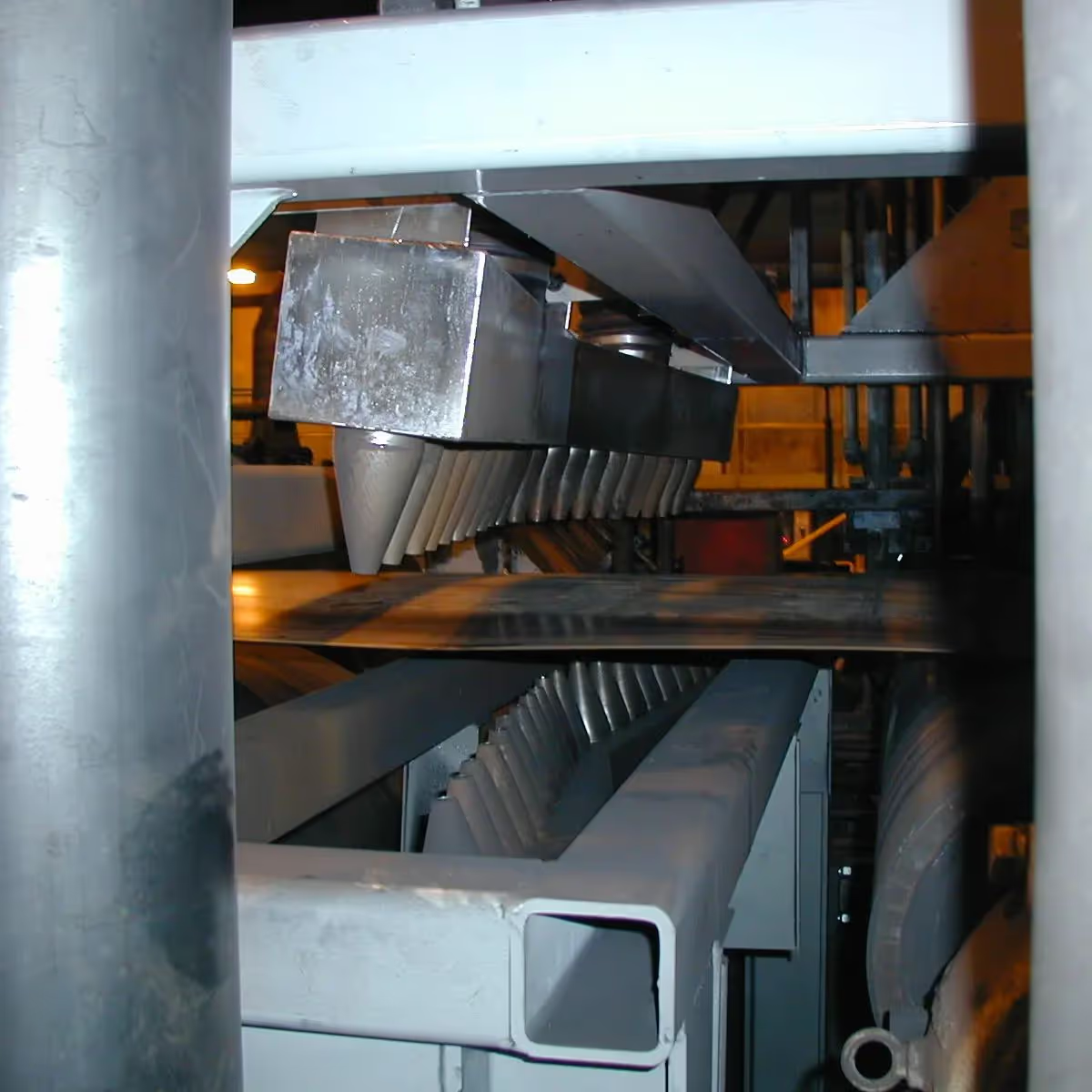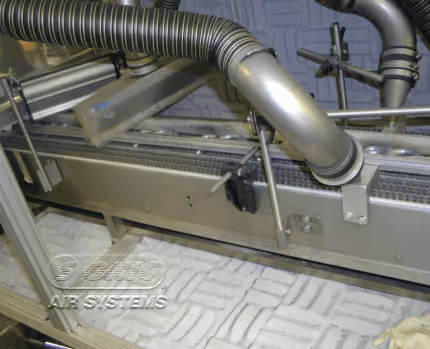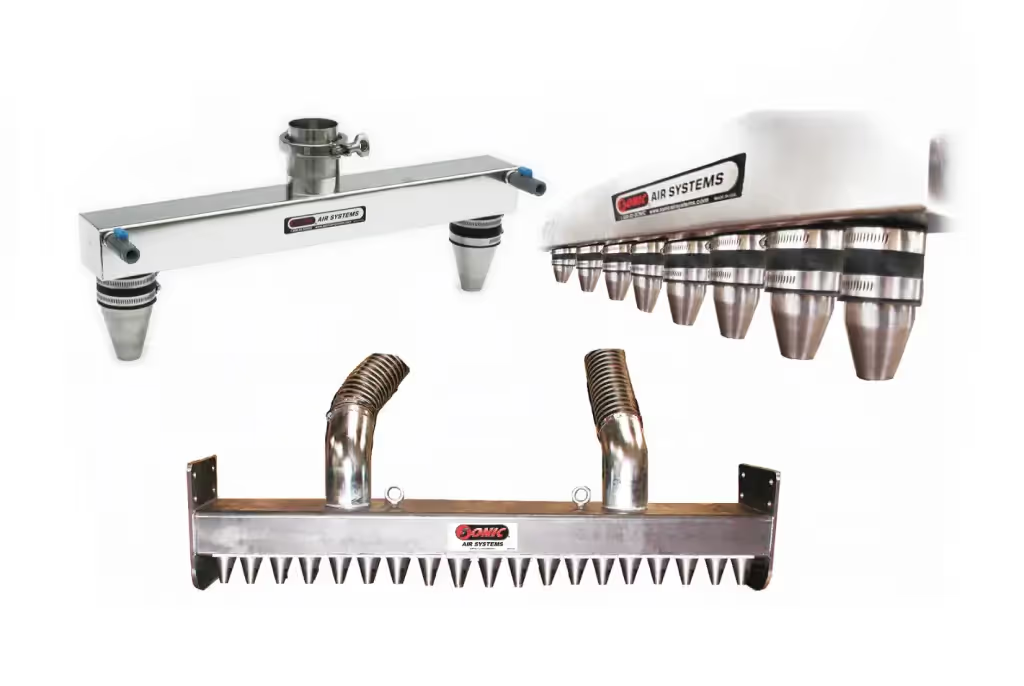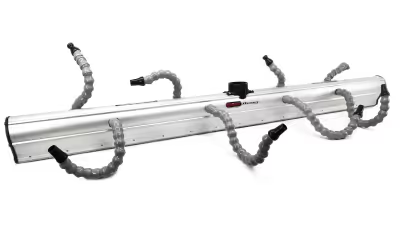
Air Nozzle Manifolds
Sonic's air nozzle manifolds provide precise, multi-point airflow for complex parts. Custom, durable, and save 75% in energy vs. compressed air.
READ MORE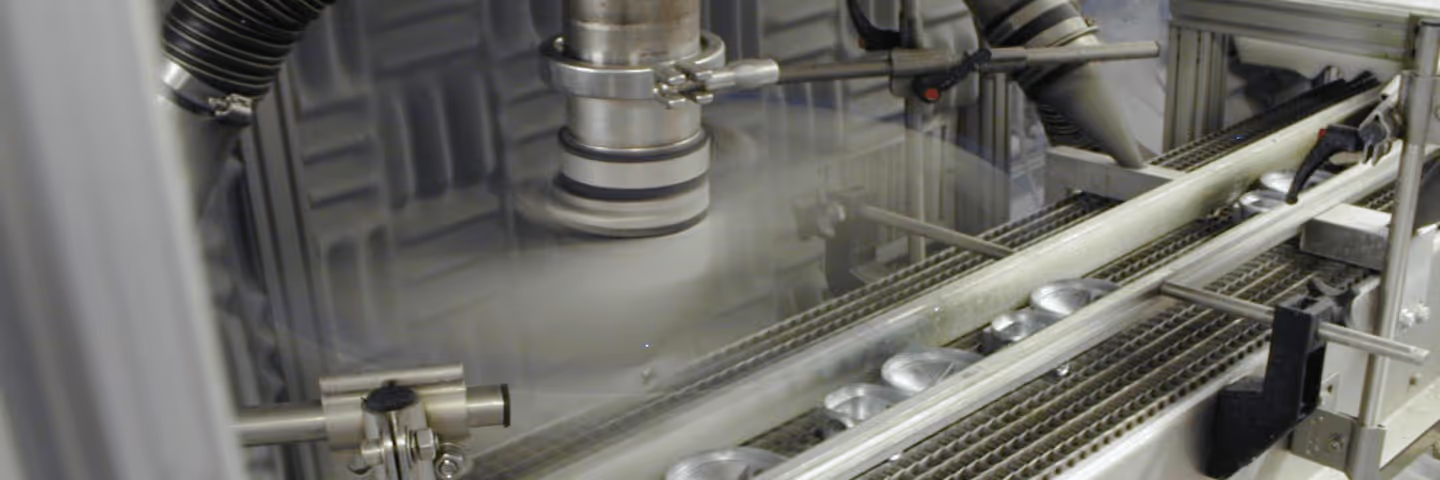
Get powerful, 360-degree cleaning for internal surfaces. Our self-propelled rotary air knife and nozzle is ideal for pipes and vessels.
Tell us about your process and we'll follow up with a recommendation.
Showing Rotary Air Knife and Air Nozzle image 1 of 6
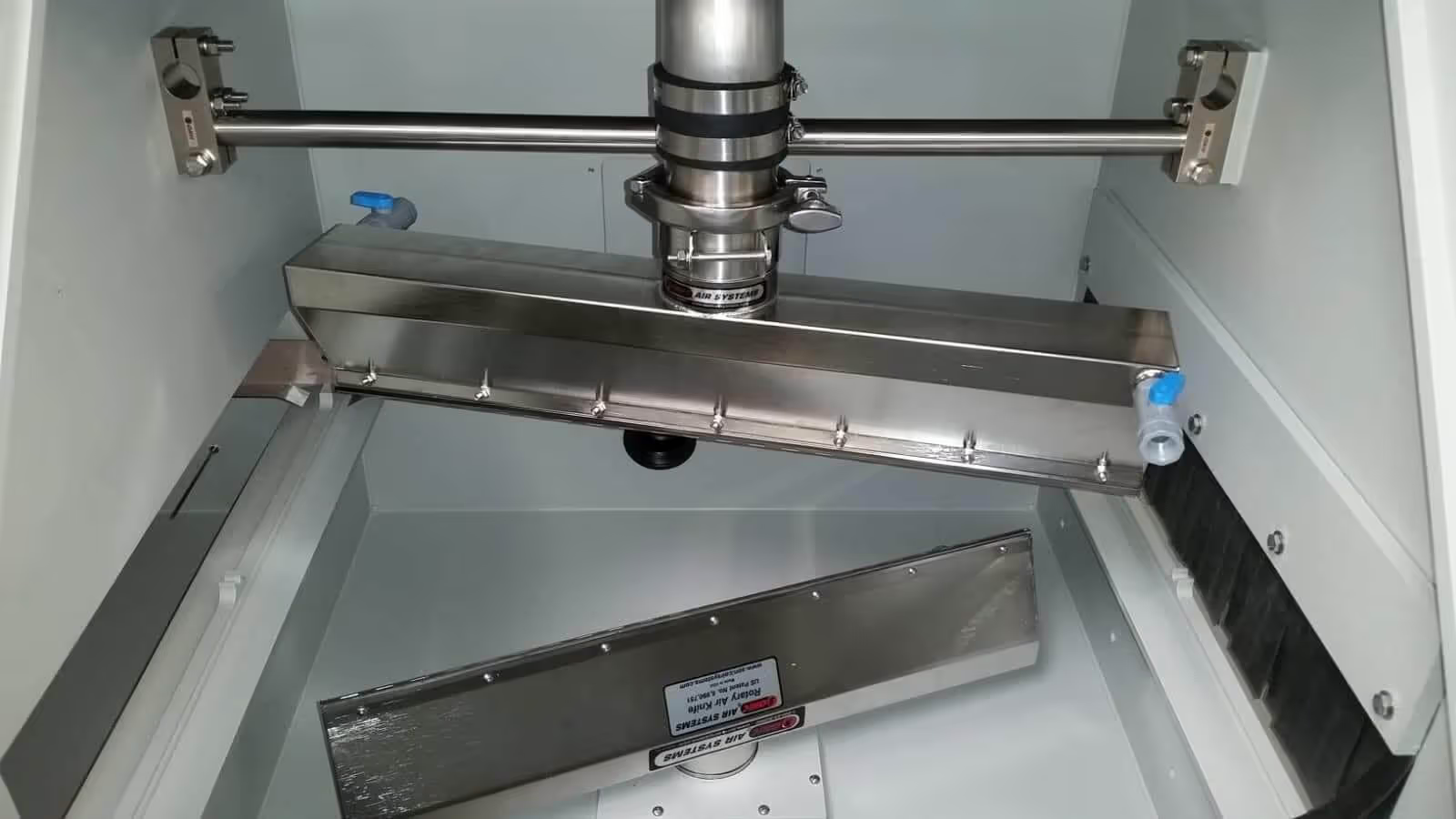
Sonic's PATENTED Rotary Air Knife and Rotary Air Nozzle significantly reduce power consumption compared to traditional stationary air knives and nozzles by up to 80%. The Rotary Air Knife is ideal for complex geometric parts such as surface mount circuit boards, medical devices, and multi-cavity products as it outperforms multiple stationary air knives for 3” to 36” (15.2 to 91.4 cm) wide coverage areas. It excels at drying and debris removal from complex shapes up to 12" away (305mm). At the same time, the rotating air nozzle is perfect for long-distance blowing and drying applications.
Sonic's Rotary Air Knives and Nozzles can also cool or heat parts. Sonic blowers can reach temperatures up to 275°F (135°C) without a separate heat source for heating. This heater-less technology enables effective drying and heating of stationary or indexed parts. It accelerates cooling from 1,000 to 100°F (537 to 38°C), surpassing liquid spray, refrigeration, CO₂, or chilled roller cooling. The COOL-AIR™ water-to-air aftercooler achieves air knife temperatures as low as 40°F (4.5°C).
Sonic Air Systems' Rotary Air Knife and Rotating Air Nozzle are advanced air solutions designed for efficient drying, debris removal, cooling, and heating in industrial applications. Unlike traditional stationary air knives and nozzles, these patented systems deliver high-speed rotating airflow, ensuring uniform and precise coverage even on complex surfaces.
The Rotary Air Knife is ideal for conveyor-based processes, effectively drying and removing particles from delicate components such as circuit boards, medical devices, and industrial parts. The Rotary Nozzle provides targeted, high-velocity airflow, making it perfect for long-distance drying, cooling, and debris removal in automotive, aerospace, and packaging industries.
Both systems are engineered to reduce power consumption and enhance production efficiency by eliminating moisture, dust, and contaminants more effectively than stationary counterparts.
Determining the best valve for your system depends on balancing air volume, pressure, and material characteristics. When these factors align, you achieve smoother performance, higher efficiency, and long-term reliability. The ideal configuration not only maintains consistent airflow and minimizes pressure loss but also enhances energy efficiency across continuous production cycles.
When specifying an industrial air diverter valve, consider the following engineering factors to ensure long-term reliability:
Sonic's air nozzle manifolds provide precise, multi-point airflow for complex parts. Custom, durable, and save 75% in energy vs. compressed air.
READ MOREUp to 80% less, since the rotating motion covers a wider area with less total airflow than several stationary knives would need to achieve the same coverage.
Complex geometric parts, like circuit boards, medical devices, and multi cavity components, benefit most, since the rotation reaches around irregular shapes a flat, stationary knife would miss.
Both. Sonic blowers can reach up to 275°F for heating without a separate heat source, and the COOL-AIR aftercooler can bring air knife temperatures down to 40°F for rapid cooling.
Up to 12 inches, which makes it useful for long distance drying, cooling, and debris removal where a stationary knife would need to sit much closer to the product.
Share the product, line speed, dimensions, and operating environment. Sonic’s engineering team will help shape the right air delivery system.
Share a few details about your process and we'll follow up with next steps.