
CASE STUDIES
Sonic Air Knife System Eliminates Compressed Air for Tire Tread Drying at Bridgestone
%20(1).png)
Key Takeaways:
- Bridgestone/Firestone needed a way to dry tire tread without using compressed air, as oils and condensate in compressed air could damage the rubber, and previous methods failed to deliver results.
- A Sonic 70 blower with a 10 HP motor powered dual air knives system to address the application. Airflow exceeding 30,000 FPM (340 mph) removed all visible rinse water at a line speed of 100 FPM.
The blower air knife system eliminated compressed air while achieving complete drying of both top and bottom surfaces. Various sizes of Sonic blowers and air knives were The solution was successfully implemented across Bridgestone/Firestone plants in the U.S., Mexico, and Brazil.
Overview
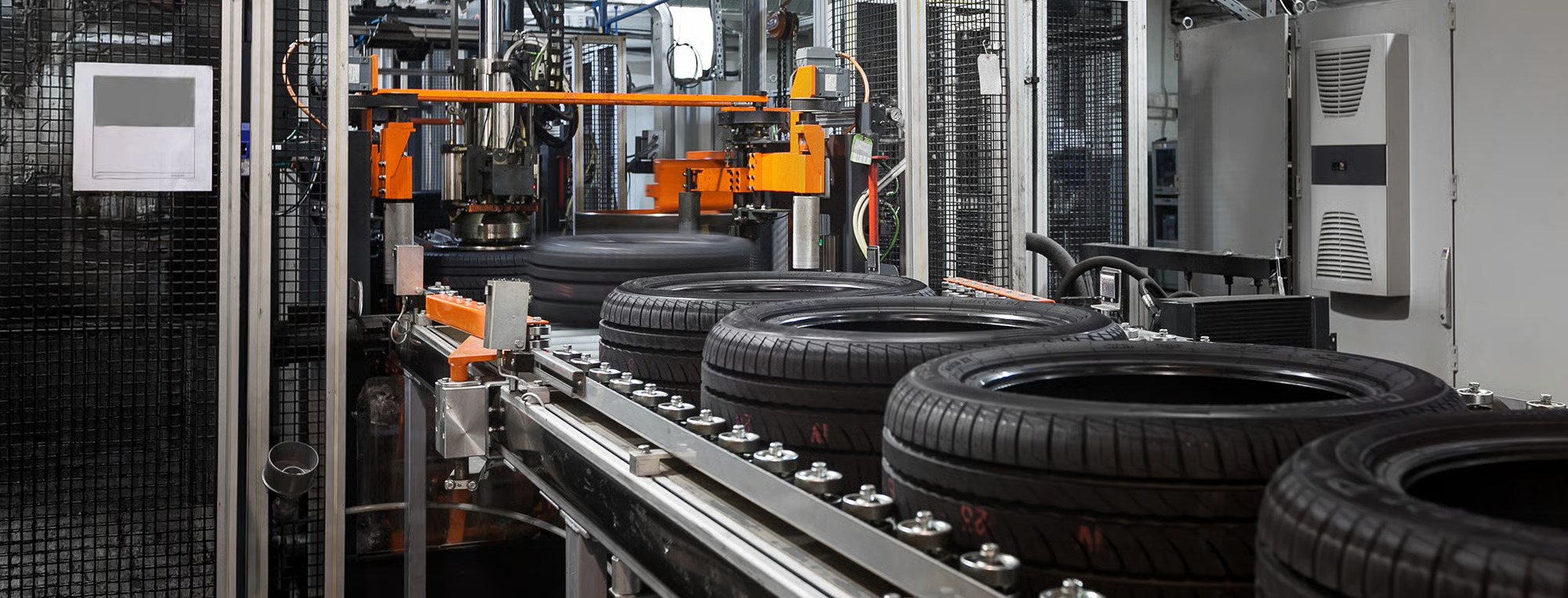
Bridgestone/Firestone’s La Vergne, Tennessee plant is one of the most modern automotive truck tire manufacturing facilities in the world. Located about 1.5 hours southeast of Nashville in Warren County, the plant occupies 900 acres of farmland and is part of Bridgestone’s international network. Despite the rural location, it employs advanced automation and robotics, minimizing human contact during tire construction.
The plant manufactures tires using a complex blend of 14 to 16 types of synthetic and natural rubber. The mixture is combined into a soft rubber slab and then pressed through rollers to remove trapped air and ensure the proper consistency and quality of the tire. Achieving precise consistency is critical because each type of rubber contributes to essential characteristics like traction, durability, and heat resistance.
A critical stage in tire production is using a tire tread drying system to remove all moisture from the tread prior to assembly. The specific tread measured 1/2” in height and 9” in width and traveled along the line at approximately 100 feet per minute (FPM). Any remaining rinse water on the top or bottom surfaces could interfere with assembly, reduce adhesion, or compromise overall tire quality.
Initially, Bridgestone relied on compressed air to remove water. The plant's automated design was built around minimizing human contact with tires, because oils from hands can damage rubber compounds during production.
Bridgestone explored alternative approaches, including installing large-volume fans and designing an in-house air knife system for tire tread drying. These methods failed to consistently remove all visible water from the tire tread. Fans lacked sufficient velocity and precision, and the custom air knife could not achieve the required coverage.
To address this challenge, Bridgestone contacted Sonic’s representative in Tennessee, and the specs and requirements were sent over to Sonic Air Systems. Sonic analyzed the plant’s existing processes, including the limitations of compressed air and other attempted methods, to develop a fully engineered solution capable of meeting production standards while maintaining rubber integrity.
Solution
Sonic Air Systems began by evaluating the plant’s current drying process and its operational requirements. The team analyzed airflow velocity, coverage area, and integration with automated handling systems. Sonic determined that the solution needed to provide oil-free and moisture-free high-velocity airflow across the entire surface of the tire tread system to achieve consistent drying at production speeds.
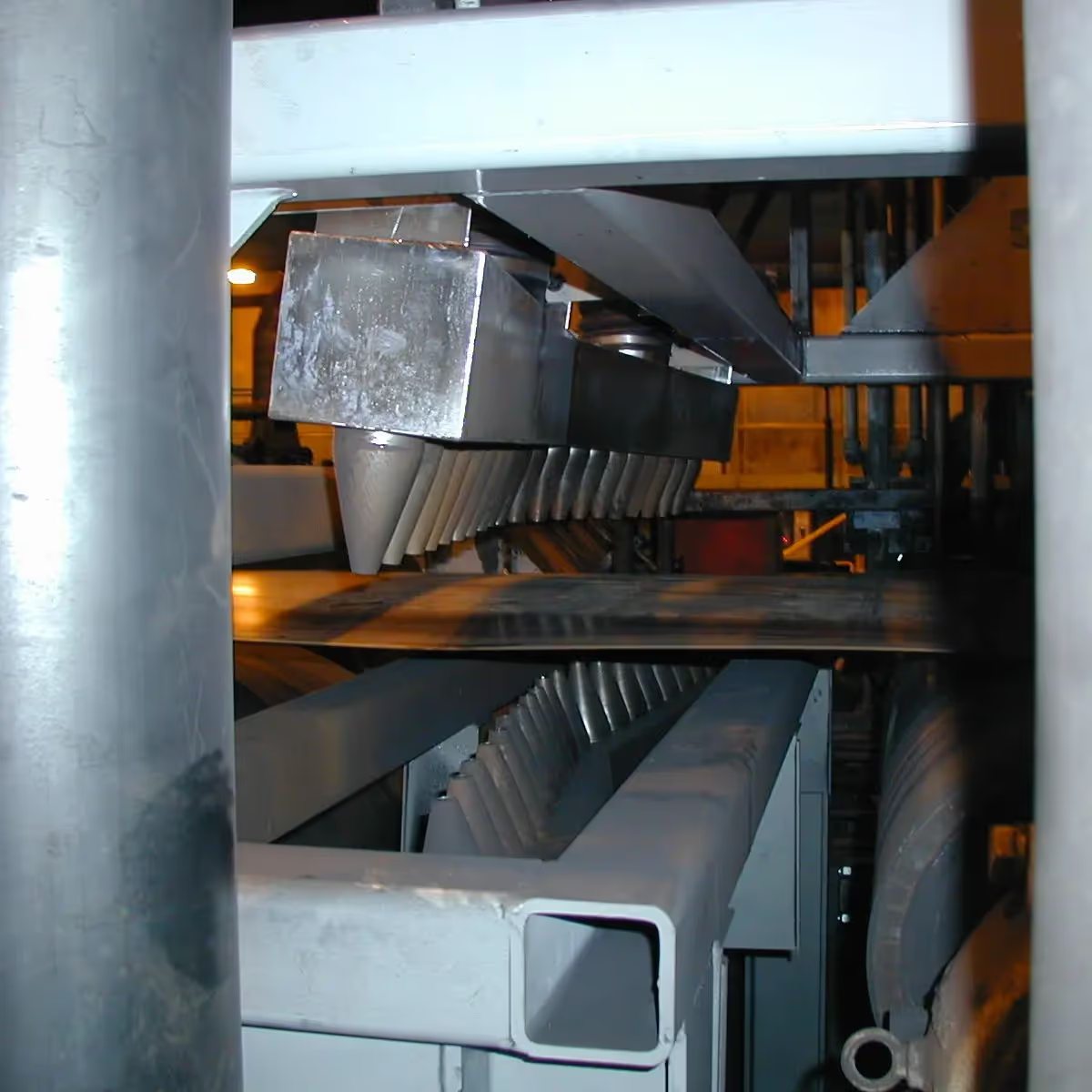
The recommended solution was a Sonic blower equipped with a 10 HP motor, powering high-velocity air knives positioned above and below the tire tread. The system delivered laminar flow air to blast all visible rinse water from both top and bottom surfaces while the tire components travel at 100 FPM.
The design included several key elements:
- Air knife blow-off: The angle of attack from the top air knives was set to create directional blow-off, optimizing water removal and enabling efficient recovery of displaced rinse water.
- Oil-free airflow: Unlike compressed air, the Sonic blower delivered clean air, eliminating contamination risks and preserving the integrity of the rubber.
- Slightly heated air: The compression process naturally heated the airflow, enhancing drying efficiency without additional energy input.
- High-performance replacement: The system fully replaced fans and the in-house air knife, providing a reliable, repeatable solution capable of sustaining high production speeds.
Sonic engineered an air knife system for tire tread drying to integrate seamlessly with the plant’s automated processes, ensuring that each tire received uniform, thorough drying.
Result
The installation of the Sonic blower air knife system significantly improved Bridgestone’s tire production process. Key outcomes included:
- Elimination of compressed air: The Sonic system removed the need for compressed air entirely, eliminating contamination risks while reducing energy costs associated with high-pressure blow-off systems.
- Consistent high-speed drying: Both the top and bottom air knives removed all visible rinse water at production speeds of 100 FPM. Tires were moved to assembly fully dry, ensuring quality and preventing defects.
- Reliable replacement of prior methods: Fans and in-house air knives had failed to deliver uniform industrial drying for tire assembly. The Sonic system delivered a dependable, repeatable solution that met production requirements.
- Oil-free, slightly heated air: Air heated naturally by compression enhanced drying efficiency, while remaining completely free of oils that could affect the rubber.
- Scalable deployment: After success at La Vergne, Sonic Air Systems’ solution was implemented at multiple Bridgestone/Firestone plants across the U.S., as well as facilities in Mexico and Brazil. The system adapted to different layouts, production speeds, and operational conditions without compromising performance.
By replacing compressed air, large volume fans, and earlier unsuccessful attempts with a correctly engineered blower-driven air knife system, Bridgestone gained a reliable method for high-speed tire tread drying while maintaining the cleanliness standards required for tire production.
Related Products