
CASE STUDIES
How Berentzen Eliminated Cold-Bottle Labeling Failures with a Heater-Less Sonic Hot Air Knife System

.png)
Key Takeaways
- Berentzen's extra-thick glass bottles were arriving at the labeler coated in condensation and, in winter, a thin layer of ice. Self-adhesive labels would not bond, and the line could not start until bottles had been pre-warmed in a heated warehouse.
- Sonic designed a Variable Temperature air knife system that raises exit air temperature to approximately 160 degrees F using its patented hot air blower, with no heater required.
- At 30,000 bottles per hour, the system removed the ice layer and eliminated condensation before the label station. The heated warehouse pre-warming step was no longer needed.
Overview
Berentzen is one of Germany's premier distilled spirits producers, with a product range spanning grain spirits, schnapps, and liqueurs sold across Europe and beyond. Their bottling operation runs high volumes of glass bottles mechanically filled, capped, and labeled in sequence.
The bottles that create the problem are their extra-thick square glass format, 70 x 40 x 180mm, traveling in single file at 30,000 bottles per hour. The thick glass is excellent for the product but retains cold exceptionally well. When bottles move directly from unheated winter bulk storage into the production environment, the glass stays cold long after the fill station. Room-temperature liquor fills the bottle, but the glass itself remains chilled.
In that condition, ambient moisture condenses on the outer surface of the bottle before it reaches the labeler. In winter, the cold was severe enough that a thin layer of ice would form on the glass. Self-adhesive labels will not bond to a cold or wet surface. The result was a complete bottleneck: filling and labeling could only begin after empty bottles had been stacked in a heated warehouse and allowed to warm. That workaround consumed time, space, and energy on every winter production run.
Solution
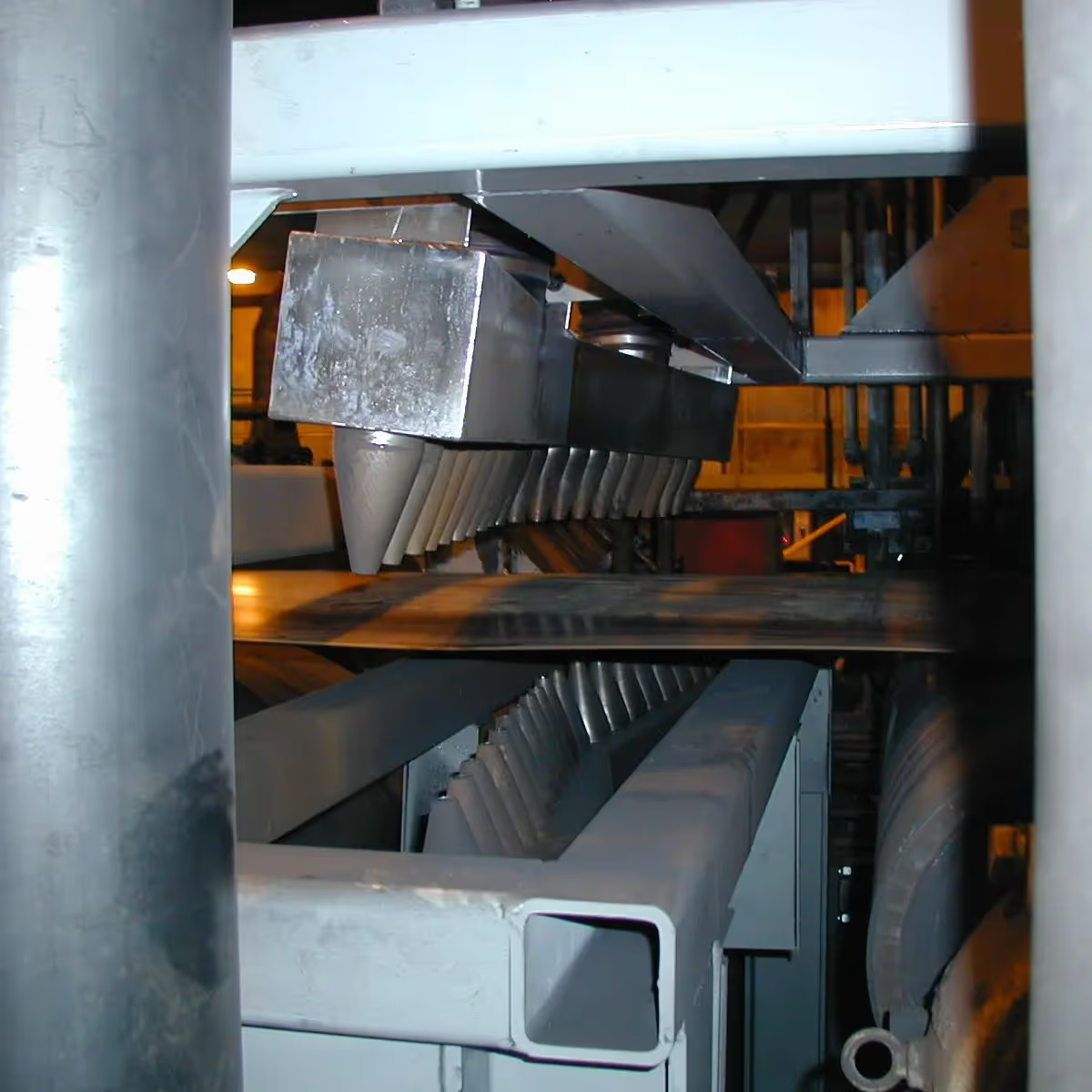
Sonic engineered a compact air knife system sized specifically for the Berentzen bottle format and production rate. The system uses two air knives powered by a patented Sonic VT (Variable Temperature) blower.
The VT design is central to how the system solves the cold-bottle problem. Rather than relying on an external heater, the VT blower raises exit air temperature using heat generated by the blower. No external heat source is required, which reduces energy cost and eliminates a potential failure point.
The two air knives are positioned 0.40 inches from each side of the bottle surface and deliver air at an exit velocity of 30,000 feet per minute. At that velocity, with the elevated air temperature, the system removes both the thin ice layer and the residual condensation simultaneously as bottles pass through the station.
Quick-Release brackets were also installed on the air knives, allowing the system to be adjusted or serviced without tools. The system fit into the existing production line without requiring additional infrastructure.
Result
With the Sonic Variable Temperature air knife system in place, Berentzen's cold-bottle labeling problem was resolved at the source. Bottles arrive at the label station dry, regardless of their starting temperature or the ambient conditions in the production hall. The heated warehouse pre-warming step was eliminated entirely, returning that time and space to production.
For beverage producers running cold-fill or cold-storage operations with glass bottles, the Berentzen installation is a direct reference point. Contact Sonic to discuss how a Variable Temperature air knife system can be configured for your line.
Related Products